

Home > News > Which EGR Delete Kit Actually Helps a 6.7L Powerstroke Run Cooler? (2026)

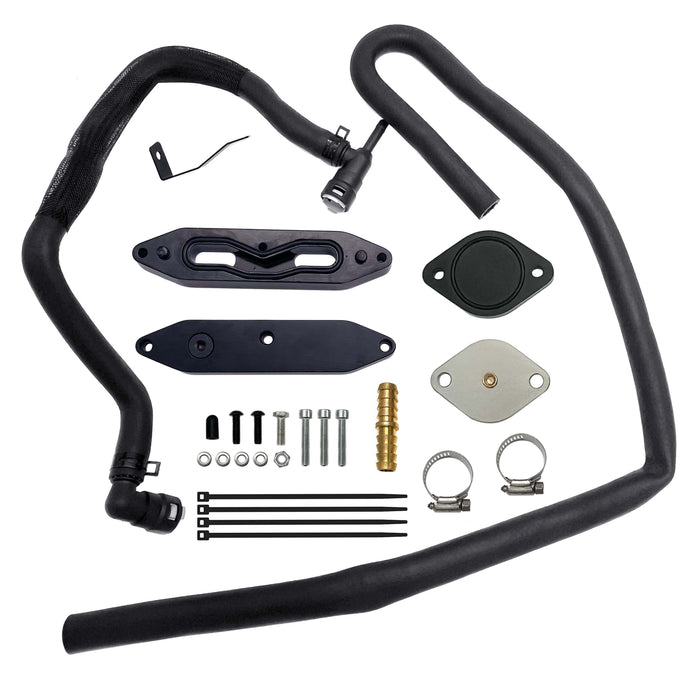


Which EGR Delete Kit Actually Helps a 6.7L Powerstroke Run Cooler? (2026)
Here’s the thing most delete marketing gets wrong: removing the EGR does not make the combustion chamber run cooler — the EGR was already doing that. What an EGR delete actually does is clean up the intake side and stabilize exhaust gas temperature. Understanding that distinction is the difference between buying a kit that helps and one that just throws codes.
Does an EGR Delete Actually Lower Temperatures?
Not the way most people think. The EGR system exists to lower combustion temperatures by diluting the intake charge — so removing it can actually raise peak in-cylinder temperature slightly. That’s why this topic confuses so many people, and it’s exactly the nuance the good answers get right.
What EGR Does (and Why Deleting It Is Nuanced)
Exhaust gas recirculation sends a metered amount of spent exhaust back into the intake. That inert gas displaces oxygen, which cools the combustion flame and cuts NOx. So the EGR is a cooling device for the combustion event itself.
The problem is the byproduct:
That same exhaust is carrying soot, and when it meets oil vapor from the crankcase, it bakes into the sticky carbon that clogs intake runners, the EGR valve, and the cooler. So EGR gives you a cooler burn and a dirtier intake.
EGT vs ECT vs Oil Temp — Don’t Confuse Them
These are three different temperatures that get mixed up constantly, and the confusion is where the “run cooler” myth lives.
-
EGT (exhaust gas temperature) — the heat leaving through the turbo and pistons. This is what a delete actually improves, by removing the recirculated heat and letting exhaust flow cleanly out. Safe sustained ceiling is around 1,250°F pre-turbo.
-
ECT (engine coolant temperature) — how hot the cooling system runs. Normal is 190–220°F; an EGR delete barely moves this, because the EGR isn’t a major heat input to the coolant on a healthy truck.
-
Oil temperature — the health of your bearings and turbo. Normal is 200–230°F, danger starts past 250°F. This is driven by load and oil cooler health, not by the EGR.
What Actually Runs Cooler
-
The intake charge — no more hot, soot-laden exhaust being pumped back in, so intake air temperature (IAT) drops and the turbo sees cleaner, denser air.
-
The EGT, and its stability — with the recirculation loop gone, exhaust temperature stops spiking the way it does when the EGR valve cycles under load.
-
The intake tract and EGR cooler — no more carbon buildup means no more restriction, no more heat soak from a half-clogged cooler.
So the honest answer to the title is: the intake runs cooler, the exhaust runs steadier, and the combustion chamber doesn’t change much at all. Anyone claiming the whole engine runs 50° cooler is selling you a story, not a kit.
How Does a Delete Kit Change Temperatures?
A proper EGR delete changes temperatures through three mechanisms, and they compound:
- Airflow — removing the EGR valve and cooler opens up the intake path, so the turbo spools with less restriction and the charge air flows freer.
- Intake temperature — no recirculated exhaust means cooler, denser air reaches the combustion chamber.
- Turbo efficiency — cleaner intake air and lower exhaust backpressure let the turbo work in a more efficient part of its map, which shows up as steadier EGT under sustained load.
The honest caveat: the delete itself doesn’t add horsepower, and it doesn’t lower coolant temperature. What it does is remove a failure point and clean up the air path, which pays off in EGT stability and intake cleanliness over tens of thousands of miles.
Which Kit Features Actually Matter for Cooling?
Not all EGR delete kits are equal, and the difference shows up in how well the truck manages heat afterward. Here’s what separates a kit that helps from one that leaks.
| Feature | Why It Matters | What to Look For |
|---|---|---|
| Block-off plate material | The plate seals the exhaust port and must survive repeated heat cycling | Billet 6061 aluminum or 304 stainless; avoid thin stamped mild steel |
| Coolant reroute | The 6.7L’s EGR cooler sits in a secondary coolant loop; if you delete the cooler but don’t reroute the coolant, you can trap air or starve a cylinder bank | A proper bypass plate or reroute hose that keeps coolant flowing |
| Seals and gaskets | A leaking block-off plate causes exhaust or coolant seepage that undoes the whole point | Fresh O-rings and gaskets, not reused worn ones |
| Hardware | Cheap bolts strip or snap under the 6.7L’s heat and vibration | Grade-8 fasteners, correct thread, torque specs included |
The coolant reroute is the one most buyers overlook, and it’s the one that determines whether a “cooler running” claim is true or marketing. On the 6.7L, the EGR cooler is plumbed into the secondary cooling system — block it off wrong and you can create a hot spot on cylinders #4 and #8.
Which Kit Matches Your Powerstroke?
The three Powerstroke generations have completely different weak points, so the “best” kit depends on which engine you actually have.
| Generation | Years | Key Weak Point | What the EGR Delete Helps (and Doesn’t) |
|---|---|---|---|
| 6.0L | 2003–2007 | Oil cooler clogs with casting sand → EGR cooler runs dry and cracks | EGR delete stops the cooler crack, but you must address the oil cooler or the engine still runs hot |
| 6.4L | 2008–2010 | DPF regen dumps fuel into cylinders #7/#8 → cracked pistons | EGR delete is part of a delete, but the piston and regen problem is separate |
| 6.7L | 2011–2023 | Bosch CP4.2 fuel pump (2011–2019) sends metal through the fuel system | EGR delete cleans the intake and stabilizes EGT; the CP4.2 is a fuel problem it can’t fix |
The takeaway:
An EGR delete is a reliability and intake-cleanliness mod, not a magic cooling fix. On the 6.0L especially, deleting the EGR without fixing the plugged oil cooler leaves the engine running hot anyway — the EGR cooler was the victim, not the cause.
What Do EGR Delete Kits Cost in 2026?
6.7L EGR delete kits cluster in a tight range, and the price difference mostly tracks the quality of the coolant reroute — not the raw metal.
| Kit | Price | What You Get |
|---|---|---|
| Entry | ~$56 | Pass-through coolant plate + 304 stainless block-off |
| Mid | ~$86 | Bypass plate that protects #4/#8 hot spots + upgraded silicone reroute hose |
| Premium | ~$109 | Dual-layer plate + molded quick-connect coolant hose (true plug-and-play) |
Source: TruckTok retail listings, verified 2026. The step up from entry to premium is almost entirely about the coolant reroute being done right.
What Are the Five Mistakes That Cost the Most?
1. Believing “delete = never hot again.” The EGR was cooling the burn. Delete it and you’ve removed one source of intake heat but not the cooling system’s job. A hot-running truck needs a radiator, thermostat, or fan-clutch fix — not an EGR kit.
2. Mixing up ECT and EGT. People watch the coolant gauge, see it move, and think the delete did something — or worse, think their EGT dropped when they were looking at coolant temp the whole time. They’re different systems.
3. Skipping the coolant work. Delete the cooler without a proper reroute and you trap air or starve a cylinder bank. The truck can actually run hotter in one spot than it did stock.
4. Ignoring the tune. Remove the EGR hardware without a supporting tune and the truck throws P0401/P0402 codes and may derate. The tune is non-negotiable.
5. Buying the wrong generation. A 6.0L kit is not a 6.7L kit, and the failure modes are completely different. Match the year before you order.
The pattern across all five: they come from expecting the delete to do something it was never going to do. Treat it as an intake and EGT cleanup, not a cooling-system repair, and you’ll buy the right kit for the right reason.
Frequently Asked Questions
Does deleting the EGR lower EGT?
It lowers and stabilizes EGT under sustained load, because the recirculated hot exhaust is gone and the turbo sees less backpressure. But it does not lower coolant temperature, and the in-cylinder peak temperature can actually rise slightly without the EGR’s cooling effect.
Why did my temps go up after deleting the EGR?
Usually because the coolant reroute was done wrong — trapped air or a starved cylinder bank will create a hot spot. It can also be the combustion temp rising now that the EGR’s charge-dilution cooling is gone. Check the reroute first.
What’s the difference between EGT and coolant temp?
EGT is the exhaust gas temperature leaving through the turbo — it tracks combustion and turbo health, with a ~1,250°F safe ceiling. Coolant temp is how hot the engine’s cooling system runs, normally 190–220°F. They measure different things and move independently.
Which Powerstroke years have the worst EGR problems?
The 6.0L (2003–2007) is the worst — its EGR cooler fails when the oil cooler plugs with casting sand. The 6.4L (2008–2010) has its own regen-driven issues. The 6.7L (2011–2023) has the most reliable EGR of the three, which is why a 6.7L delete is more of a maintenance choice than an emergency.
Do I need a tune after an EGR delete?
Yes. Without a tune, the ECM sees missing EGR flow and sets P0401/P0402 codes, often derating the truck. The tune is required, not optional.
Is an EGR delete legal?
No, on a street-driven truck. Removing emissions equipment violates the federal Clean Air Act (42 U.S.C. § 7522), and these kits are sold for off-road and competition use only. Check your local laws.
What’s the best EGR delete kit for a 6.7 Powerstroke?
The one with the coolant reroute done right — a bypass plate or molded quick-connect hose that keeps the secondary cooling loop flowing. Material and seals matter more than the block-off plate’s brand name.
Will an EGR delete void my warranty?
Yes. Removing emissions hardware will void the emissions-related portion of your factory warranty, and can complicate other powertrain claims.
How much does an EGR delete cost?
The kit itself runs roughly $56–$109 for a 6.7L, plus the cost of the tuner and installation. Done right with a tune and proper install, expect a few hundred dollars all-in for the hardware side.
Does an EGR delete hurt fuel economy?
It can slightly help by keeping the intake clean and letting the engine breathe — but the gains are small and secondary. It’s not a fuel-economy mod, and anyone promising big MPG gains is overselling.
Can I clean my EGR instead of deleting it?
Yes, if the problem is carbon buildup on a functioning valve. Cleaning helps a dirty-but-working EGR; it won’t fix a cracked cooler or a mechanically failed valve. Cleaning is the legal, warranty-friendly first step before you consider deletion.
What supporting mods go with an EGR delete?
A tune (required), a coolant reroute done properly, and — if you want to stop the carbon from coming back — a CCV reroute, since oil vapor from the crankcase is the other half of the intake-crust equation.
Get the Right EGR Delete Kit for Your 6.7L
An EGR delete isn’t a shortcut to a cold engine — it’s a reliability upgrade that cleans your intake and stabilizes EGT, if the kit routes the coolant correctly and you pair it with a tune. The owners who get the “run cooler” result are the ones who understood that distinction before they bought.
For 6.7L EGR delete kits built with proper coolant reroutes — from the entry pass-through kit to the hot-spot-protecting bypass plate to the plug-and-play premium kit — matched to your exact year — browse the lineup at TruckTok.com.
Want to see how other car owners made their choices? Here are a few posts worth reading:
- Which EGR Delete Kit Actually Helps a 6.7L Powerstroke Run Cooler?
-
Is EGR Delete, DPF Delete & CCV Reroute Worth It on a 6.7L Powerstroke?

Legal Disclaimer
For off-road / competition use only. Not legal for on-road use in emissions-regulated areas. Check your local, state, and federal laws before modifying any emissions-related component.