
Home > News > 2026 Best CCV Reroute Kits for Diesel Trucks: Stop Oil Buildup


2026 Best CCV Reroute Kits for Diesel Trucks: Stop Oil Buildup
A CCV reroute kit redirects oily crankcase blow-by out of the intake path, so that oil mist stops coating your turbo compressor wheel, intercooler, and intake valves. The best kit for you depends on your engine platform and whether you want a recirculating catch can or a simple filter swap.
For off-road / competition use only. Not legal for on-road use in emissions-regulated areas. Check your local, state, and federal laws before modifying any emissions-related component.
What Does a CCV Reroute Kit Actually Do?
It changes where the crankcase breathes. Every diesel pushes a little combustion gas past the piston rings — that’s blow-by, and it carries oil mist, moisture, and unburned fuel. The factory route sends that vapor straight back into the turbo inlet to keep emissions closed. A reroute kit moves that oily vapor off the intake path, so the oil never reaches your turbo and intercooler.
Why Does Oil Buildup Matter?
The oil mist isn’t harmless — it’s the sticky glue that turns a dirty intake into a performance and reliability problem.
What It Does to Your Turbo
Oil vapor condenses on the compressor wheel, where it bakes into a carbon glaze that throws the wheel out of balance and dulls spool response. Over tens of thousands of miles, a coated compressor wheel costs you throttle response and can shorten the turbo’s life. A clean wheel is the difference between crisp spool and a truck that feels a beat behind the throttle.
What It Does to Your Intercooler and Intake Valves
Oil pools in the intercooler, cutting its cooling efficiency, and coats the intake valves in a sticky film. Add exhaust soot to that film and you get the hard carbon crust that slowly chokes the engine. Over time that crust narrows the intake runners, and the engine starts to feel lazy at the exact rev range where it used to pull hardest.
This is the same oil-vapor-plus-soot buildup that makes EGR deletes feel like they “wake up” an engine.
The Symptom List
- Blue smoke at idle or after deceleration — oil entering the combustion chamber
- Rising oil consumption — oil mist being burned instead of returned
- Lazy throttle / lost power — a restricted, oil-soaked intake
- Turbo carbon buildup — visible glaze on the compressor wheel
If you’re seeing two or more of these together, the CCV is worth a hard look before you spend on anything else. For a deeper dive on separating a plugged CCV filter from real engine blow-by, see our 6.7L Powerstroke CCV problems guide.
Reroute, Catch Can, or Filter — Which One Do You Need?
These three get called the same thing constantly, but they’re different jobs with different risk levels.
| Option | What It Does | Cost | Maintenance | Compliance |
|---|---|---|---|---|
| OEM filter replacement | Keeps the factory closed system, swaps the separator element | Low | Replace on schedule | Cleanest, most compliant |
| Reroute + catch can | Redirects vapor through an oil separator, then back to intake (or a filtered vent) | Mid | Drain the can periodically | Recirculating versions are the safer bet |
| Full vent-to-atmosphere | Removes the path entirely, vents externally | Low–mid | Watch for drips | Most risk — odor, drips, and legality |
The recirculating catch-can setup is the sweet spot for most owners: it stops the oil from reaching the intake without venting a mess onto the road or into the cab.
Which Kit Fits Which Truck?
The CCV system is not the same across platforms, and the 6.7 Powerstroke is the one with the most year-to-year variation.
| Platform | CCV Setup | What You’ll Likely Want |
|---|---|---|
| Cummins 6.7 | Sealed, filter built into the valve cover | Catch can, or replace the internal filter on schedule |
| Powerstroke 6.7 | Filter box (2011–2019), sealed baffle box (2019+) | Recirculating kit, or year-correct filter replacement |
| Duramax 6.6 | External CCV/PCV routing that varies by generation | Platform-matched reroute kit |
On the 6.7 Powerstroke specifically:
The CCV filter is a known trouble spot: the 2011–2019 trucks use a replaceable element (the FL2077-class part) that plugs and blows out seals, while later trucks moved to a sealed box. A recirculating kit sidesteps that maintenance entirely.
The Cummins 6.7 is the simplest:
Its CCV filter is sealed inside the valve cover, so there’s no external filter to swap — a catch can just plumbs into the existing breather line, and the only real decision is how often you’re willing to drain it.
The Duramax 6.6 splits by generation:
It with earlier trucks running an external PCV/CCV path that a matched reroute kit bolts into, while the LML and L5P each need their own year-specific routing.
What Should You Look For in a Kit?
Not all reroute kits are built for a diesel’s heat and pressure.
| Feature | Why It Matters |
|---|---|
| Oil- and heat-resistant hose | Diesel crankcase vapor runs hot; cheap hose cracks and leaks |
| Proper mounting bracket | A flopping can or hose chafes and fails |
| Recirculating (return) design | Keeps odor and drips out of the cab and driveway |
| Serviceable filter or drain | A catch can you can’t drain is a future problem |
What Do CCV Kits Cost in 2026?
CCV kits cluster in a predictable range, with the recirculating catch-can setups at the top because they actually separate and return the oil.
| Kit Type | Typical Price | What You Get |
|---|---|---|
| Filter replacement | ~$80–$112 | Factory-style separator element |
| Basic reroute | ~$80–$85 | Redirect hose + vent |
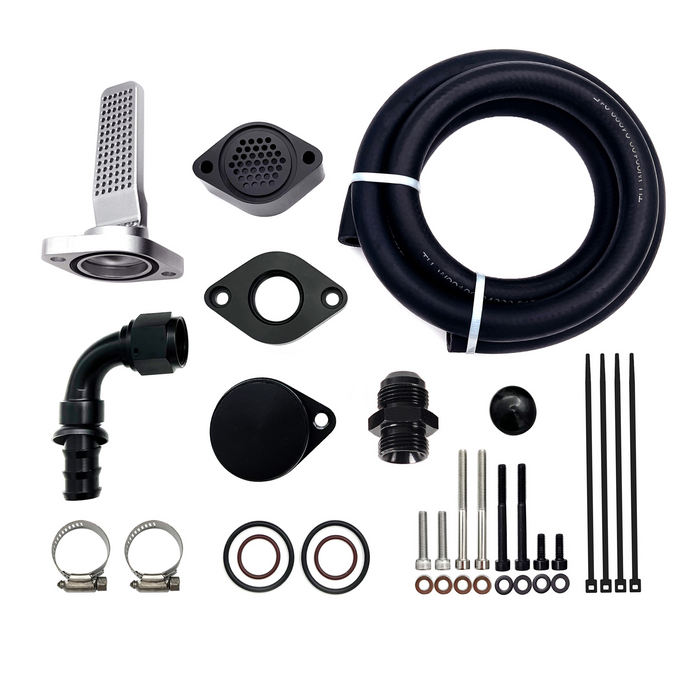
| Recirculating catch can | ~$259 | Billet can that separates oil and returns clean air |
Source: TruckTok retail listings, verified 2026. The price difference mostly buys you the oil-separation hardware — which is the part that actually stops the buildup instead of just moving it. Spend the extra on a recirculating can and you’ll notice the difference at the first oil change, when the intake stays dry.
What Are the Five Mistakes That Cost the Most?
1. Thinking a reroute is an emissions delete. It’s an intake-cleanliness and maintenance mod, not a power mod or a delete. Confusing the two leads to the wrong expectations and the wrong legal assumptions.
2. Venting onto the road or a tire. A poorly routed open vent drips oil onto hot exhaust or a tire, which is a mess and a hazard. Route it to a catch can or a filtered, protected spot.
3. Cheap hose that cracks in the heat. Diesel crankcase vapor is hot. Cheap hose hardens, cracks, and leaks oil vapor back into the bay — undoing the whole point.
4. Running an open vent with no separator. Direct-to-atmosphere with no catch can stinks up the cab and can trip a check-engine light on trucks with a CCV sensor.
5. Ignoring the factory CCV filter’s schedule. If you stay stock, the 6.7 Powerstroke’s filter still needs replacing on its interval — a plugged filter raises crankcase pressure and blows out seals.
The pattern across all five: they come from treating the CCV as either a magic power mod or a throwaway part. It’s neither — it’s a maintenance item that, done right, keeps your intake clean for the life of the truck.
While you’re looking at the 6.7 Powerstroke’s weak points, the CCV isn’t the only one worth planning around — the CP4.2 fuel pump is the other. A disaster prevention bypass kit is the same kind of cheap insurance against a much bigger bill.
Frequently Asked Questions
What does a CCV reroute kit do?
It redirects oily crankcase blow-by away from the turbo inlet and intake path, so oil mist stops coating the compressor wheel, intercooler, and intake valves. It’s a maintenance and cleanliness upgrade, not a horsepower mod.
Is a CCV reroute legal?
A recirculating setup that keeps the crankcase closed is generally the safer choice for a street truck. A full vent-to-atmosphere setup can raise emissions-compliance and odor questions depending on local law — check before you commit.
Reroute vs catch can — which is better?
They’re the same thing in most kits: the “catch can” is the separator that a reroute routes the vapor through. A recirculating catch can returns clean air to the intake, which is better than an open vent for odor and drips.
Why is my intake full of oil?
Because the factory CCV system routes crankcase blow-by — which carries oil mist — back into the intake. Over time that oil coats the turbo, intercooler, and valves. It’s normal for the system, but a reroute keeps it from happening.
Does a CCV delete hurt the engine?
A proper reroute that maintains crankcase pressure control doesn’t hurt the engine. A botched one that blocks the vent or lets pressure build will push out seals. Never block the crankcase breather path.
How often should I change a CCV filter?
On the 6.7 Powerstroke, the serviceable filter is typically due every 60,000–80,000 miles for the aftermarket guidance, and Ford’s manual points to a longer interval — check your year. If you switch to a recirculating kit, you drain the can instead.
What are the symptoms of a clogged CCV filter?
Rising crankcase pressure that shows up as oil seepage around the front or rear main seal, an expanded filter box, and oil leaks that appear out of nowhere. A plugged filter is a common cause of “mystery” oil leaks around 100,000 miles.
Which CCV kit fits a 6.7 Cummins?
The 6.7 Cummins runs a sealed CCV filter inside the valve cover, so there’s no external filter to reroute. The usual upgrade is a catch can plumbed into the breather, or replacing the internal filter on its service schedule.
Can a CCV reroute stop oil consumption?
It can reduce oil loss through the intake, but it won’t fix oil burning from worn rings, a failing turbo seal, or leaking valve seals. If consumption is high, diagnose the engine before blaming the CCV.
How much does a CCV reroute kit cost?
Roughly $80 for a basic reroute, and about $259 for a recirculating catch-can kit, based on 2026 TruckTok listings. The recirculating version is the one that actually separates and returns the oil.
Do I need a tuner for a CCV reroute?
No. A CCV reroute is mechanical and doesn’t require a tune. Some trucks with a CCV sensor may throw a code if you fully vent to atmosphere, but a recirculating kit usually avoids that.
Will a CCV reroute stop blue smoke?
It can stop the oil-mist contribution to blue smoke, but blue smoke usually points to a deeper cause — turbo seals, valve seals, or ring wear. Treat the reroute as one part of the picture, not a guaranteed fix.
Get the Right CCV Reroute Kit for Your Truck
If you’re tired of oily intake boots, a gunked turbo, and the smell of burning oil, a recirculating CCV kit is the clean fix — it separates the oil and returns clean air, instead of just moving the mess. For a 6.7L Powerstroke, the catch-can & CCV reroute kit is built for 2011–2024 trucks. For Duramax owners, the LML reroute and Cummins CCV cover the earlier and later generations. Browse the full lineup at TruckTok.com.
Legal Disclaimer
For off-road / competition use only. Not legal for on-road use in emissions-regulated areas. Check your local, state, and federal laws before modifying any emissions-related component.