
Home > News > Best Diesel Performance Kits for a Cummins Truck (2026 Buyer's Guide)


Best Diesel Performance Kits for a Cummins Truck (2026 Buyer's Guide)
On a Cummins, “performance kit” means one of three things — a tuner, an airflow upgrade, or an exhaust/fuel upgrade. Which one is “best” depends on your engine generation (5.9 vs 6.7) and your goal. Below is how to match the kit to your truck.
For off-road / competition use only. Not legal for on-road use in emissions-regulated areas. Check your local, state, and federal laws before modifying any emissions-related component.
What Actually Counts as a Performance Kit on a Cummins?
Before you spend a dollar, know what you’re buying. A “kit” on a Cummins is one of three things, and they do different jobs.
Tuners and Programmers
A tuner recalibrates fueling, timing, and boost to unlock power the factory tune left on the table. On a stock 6.7, a mild tune adds roughly 50–100 horsepower, and a hotter tune more. The catch is twofold: a tuner usually voids the factory powertrain warranty, and 2018+ trucks have a Security Gateway that requires a bypass cable before anything will flash. The H&S Mini Maxx V2 is a common pairing for the 6.7 platform.
Airflow Upgrades
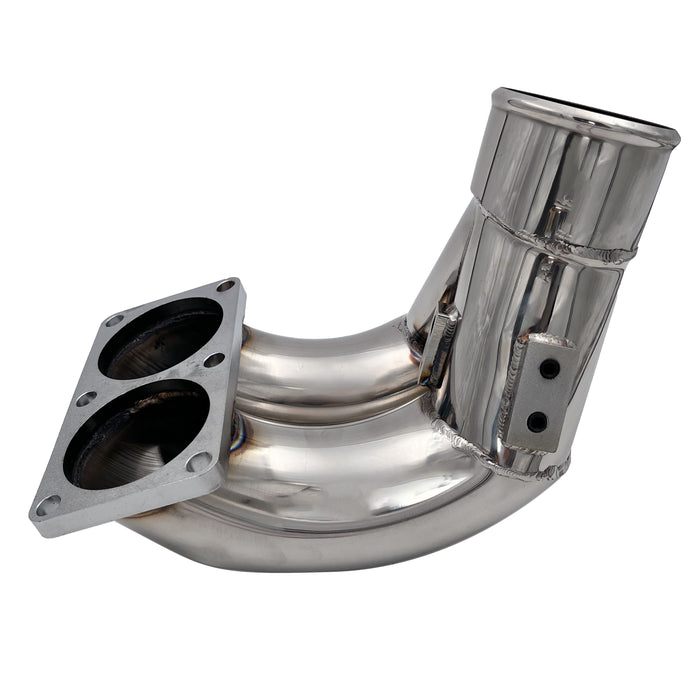
Air in is air out. A cold-air intake, a high-flow intake elbow, or an upgraded intercooler gives the turbo cooler, denser air to work with. The gains are smaller than a tune — typically 5–15 horsepower — but they lower intake temps and support the tune rather than replacing it. On a 6.7, the factory intake elbow is a known restriction, and a high-flow intake manifold elbow opens that path up.
Exhaust and Turbo-Back
The factory exhaust is the backpressure bottleneck. A larger-diameter system — 4-inch for most trucks, 5-inch for big-turbo builds — frees flow, drops EGT, and changes the sound. A 4-inch exhaust is the default; a 5-inch turbo-back is the deep, loud option for a high-output build. The flow and EGT drop are real; the sound is a matter of taste.
Fuel System Upgrades
Fuel is the support mod people skip until it bites them. A lift pump and clean filters protect the high-pressure pump and injectors — and on the 2019–2020 6.7, that high-pressure pump is the CP4.2, which is exactly the part you don’t want to starve of clean fuel.
Matching the Kit to Your Engine Generation
The right kit depends entirely on which Cummins you own. The pump and the emissions hardware changed across generations, and so did the weak points.
| Generation | Years | Fuel pump | What matters |
|---|---|---|---|
| 5.9 12V | 1989–1998 | Mechanical (VE / P7100) | No electronics; gains come from fuel plate, injectors, and turbo |
| 5.9 24V | 1998.5–2002 | VP44 (weak point) | Electronic pump is the known failure; feed it clean fuel |
| 5.9 CR | 2003–2007 | CP3 | Common-rail and reliable; a tuner wakes it up |
| 6.7 | 2007.5–2018 | CP3 | 2013+ adds the grid heater; EGR/DPF emissions |
| 6.7 | 2019–2020 | CP4.2 (weak point) | Recalled and swapped back to CP3 mid-2020 |
| 6.7 | 2020.5+ | CP3 | Back to the durable pump |
Fuel-pump and emissions data are Ram/Cummins factory specifications.

Three things to internalize:
-
The 5.9 12V is mechanical. It has no computer to tune — “performance kit” for a 12V means a fuel plate, bigger injectors, and a turbo, not a tuner. Don’t buy a tuner for a truck that has nothing to plug it into.
-
The 5.9 24V’s VP44 and the 2019–2020 CP4.2 are the two pump weak points. Both fail from contaminated fuel and low supply pressure. Fresh fuel filters on schedule and a lift pump are the cheapest insurance either pump has.
-
The 2013+ grid heater is an intake heater, not glow plugs. Its mounting bolt is a known failure point that can drop into a cylinder — worth checking if you’re already in there.
What Each Generation’s Upgrade Path Looks Like
-
5.9 12V (1989–1998): Mechanical, no ECU. The upgrade path is physical — a fuel plate, injectors, and a turbo — not a tuner. It’s the most bulletproof of the bunch but the least responsive to bolt-on electronics.
-
5.9 24V (1998.5–2002): The VP44 electronic pump is the known weak point, and it fails from low supply pressure and dirty fuel. Protect the fuel system first, then a tuner wakes up the fueling.
-
5.9 CR (2003–2007): Common-rail with the reliable CP3. A tuner is the highest-ROI single mod here, and the platform is forgiving — the engine takes more than the truck around it.
-
6.7 (2007.5–2018): CP3 pump with EGR and DPF emissions. A tuner plus intake and exhaust is the standard recipe, and 2013+ adds the grid heater to watch. The 68RFE transmission is the real ceiling.
-
6.7 (2019+): The 2019–2020 run switched to the CP4.2 — protect it or plan the swap — before 2020.5 returned to the CP3. The newest trucks also carry the encrypted ECM that needs an unlock before tuning.
What “Fast Shipping” Actually Means for Diesel Parts
Most US sellers ship a diesel part within one or two business days. The trap is the dropship listing that claims the part is ready to ship but actually has to come from a third-party warehouse — which can mean two to three weeks before it moves. Before you order, check the processing time stated on the product page rather than assuming the badge means it leaves today.
2026 Price Ranges: What You’ll Pay
Cummins performance parts fall into three bands, and the jump from one to the next is about scope, not magic.
| Tier | What you get | 2026 price |
|---|---|---|
| Entry | A cold-air intake, intake elbow, or a basic exhaust section | $150–$400 |
| Mid | A tuner, or a full 4" exhaust, or an intake + elbow combo | $400–$1,200 |
| Full bundle | Tuner + intake + exhaust together | $1,200–$3,000 |
Prices are current TruckTok retail listings verified 2026; they’re ranges because year, diameter, and scope change the price.
For reference: a 3.5" intake elbow runs about $110, a 4-inch exhaust about $190, and a delete tuner about $850. A full bundle stacks all three into the $1,200–$3,000 range.

How to Pick a Vendor
Four things separate a good diesel-parts vendor from a listing that’ll cost you time.
- Fitment guarantee — they ask for your VIN or year and confirm the part fits before it ships.
- Real reviews — verified, recent, and specific, not a wall of five-star “great product” lines.
- US-based support — a human who can answer a fitment or install question before you buy.
- Part numbers listed on the page — a vendor who shows the actual part number is confident in what they’re selling; one who hides it usually has a reason.
What Are the Five Most Expensive Cummins Performance Mistakes?
-
Buying a tuner before the supporting hardware. A hot tune on a stock intake, exhaust, and transmission is how you smoke a stock torque converter. Tune last, after the airflow and exhaust are in place.
-
A high-flow intake that filters poorly. A filter that flows great but lets dust through is feeding grit straight into the turbo and cylinders. Flow without filtration isn’t a performance part — it’s engine wear.
-
Ignoring the 2019–2020 CP4.2. Those two model years have the weak pump. If you’re adding power, protect it first with clean fuel and a lift pump, or plan for the swap.
-
Stacking a hot tune on the factory turbo. The stock turbo has a ceiling. Push past it and you’re trading reliability for a number on a dyno sheet.
-
Not checking fitment by VIN and year. “Fits 6.7 Cummins” doesn’t mean it fits your 6.7 — the emissions layout, pump, and even the exhaust routing change by year.
The thread through all five is the same: know your exact generation, protect the weak points before you spend, and build the supporting hardware before you chase a peak number. A Cummins will take the power — the question is whether the pump, the transmission, and the filters around it can keep up.
Frequently Asked Questions
What is the best first performance mod for a Cummins?
A tuner, if you want the biggest single gain — it’s the only mod that unlocks 50+ horsepower by itself. If you’re budget-limited or want to stay safer on a stock transmission, a cold-air intake or intake elbow is the gentler first step.
Do tuners void my warranty?
Yes, in almost every case. Reflashing the ECM violates the factory powertrain warranty, and a dealer can flag it. If the truck is still under warranty, that’s the decision to weigh before the tune.
How much power can a stock 6.7 Cummins handle?
The engine can take more than the rest of the truck. The 68RFE automatic is usually the first thing to slip around the 500 wheel-horsepower mark, so that’s the practical ceiling unless you build the transmission.
Is a cold air intake worth it?
It’s a modest gain — 5–15 horsepower and cooler intake temps — not a huge one. Where it earns its keep is supporting a tune and reducing intake restriction on a truck that already breathes hard.
What is the CP4.2 problem on 2019-2020 Cummins?
Those two model years used the Bosch CP4.2 pump, which can shed metal shavings into the fuel system when it fails. Ram recalled them and swapped back to the CP3 around mid-2020, so 2020.5+ trucks don’t have the problem.
Do I need a delete to make power?
No. A tune on an emissions-intact truck makes real power. A delete is a separate decision about reliability and off-road use, not a prerequisite for horsepower.
What’s the difference between a 4" and 5" exhaust?
A 4-inch system is the right size for most trucks — it frees flow and drops EGT without hurting low-end torque. A 5-inch system is for big-turbo, high-horsepower builds and is louder, heavier, and harder to fit.
How much should a Cummins performance kit cost?
An entry intake or exhaust section runs $150–$400, a tuner or full exhaust $400–$1,200, and a complete tuner-plus-intake-plus-exhaust bundle $1,200–$3,000. Anything priced far below those bands is usually cutting corners on material or filtration.
Can I run a tuner without other mods?
Yes, up to a point. A mild tune on a stock truck is fine for daily driving; the problem starts when you go hotter than the factory turbo and transmission can support without the matching hardware.
What supporting mods do I need for 100 extra HP?
A tuner to make the power, an intake to feed it, an exhaust to get it out, and — critically — attention to the transmission and fuel system. On a 2019–2020, that means protecting the CP4.2 first.
How do I check fitment for my year?
Start with your VIN and engine generation, then confirm the part’s listed years, cab and bed config, and whether it fits your pump and emissions layout. A vendor who asks for the VIN is doing it right.
What are the most reliable Cummins years?
The 5.9 12V and the common-rail 5.9 (2003–2007) have the best reputations for longevity, and the 6.7 with the CP3 pump is solid too. The weak spots to watch are the 5.9 24V’s VP44 and the 2019–2020 CP4.2.
Get the Right Kit for Your Cummins
A performance kit only pays off when it matches your engine generation and your goal. Confirm which Cummins you have — the pump and emissions layout decide what fits — then pick the one upgrade that moves the needle for how you actually use the truck. A tuner for the biggest gain, an intake for the gentler start, an exhaust for flow and EGT, and fuel protection before any of it if you’re on a weak-pump year.
Browse the full Cummins lineup at TruckTok.com, and learn more about Duramax:
Legal Disclaimer
For off-road / competition use only. Not legal for on-road use in emissions-regulated areas. Check your local, state, and federal laws before modifying any emissions-related component.