
Home > News > How to Get More Power From a Diesel Truck Without Wasting Money (2026)
How to Get More Power From a Diesel Truck Without Wasting Money (2026)
There are only four things that genuinely add power to a diesel: a tune, the intake, the exhaust, and the fuel/turbo system. Everything else — magnetic fuel savers, vortex generators, throttle spacers — is money down the drain. The trick is knowing which order to do them, because the order is where people lose money.
For off-road / competition use only. Not legal for on-road use in emissions-regulated areas. Check your local, state, and federal laws before modifying any emissions-related component.
What Actually Adds Power? (Ranked by ROI)
Four mods move the needle, and the tune is the only one worth doing on its own. Everything else is a supporting mod that pays off only after the tune is in place.
Here’s the honest ranking by cost per horsepower:
| Mod | Typical gain (with tune) | Real cost | Cost per HP |
|---|---|---|---|
| Tune (ECM calibration) | +40–120 HP | $400–$1,000 | $6–$15/HP |
| Intake / intake elbow | +5–15 HP (frees the tune) | $150–$400 | $15–$30/HP |
| Exhaust (lower backpressure) | +10–30 HP | $300–$800 | $20–$40/HP |
| Fuel / turbo upgrades | +50–200 HP | $1,000–$5,000+ | $20–$50/HP |
Gain figures are “with-tune” ranges compiled from tuner stage ratings and owner-reported dyno results (2023–2025). Costs are 2024–2025 retail price ranges.

The Tune Sits Alone at the Top
Because a modern diesel leaves 10–20% of its potential locked in the factory calibration — detuned for emissions and warranty. Unlocking it is the cheapest horsepower you’ll ever buy.
The Intake Is the First Supporting Mod That Matters
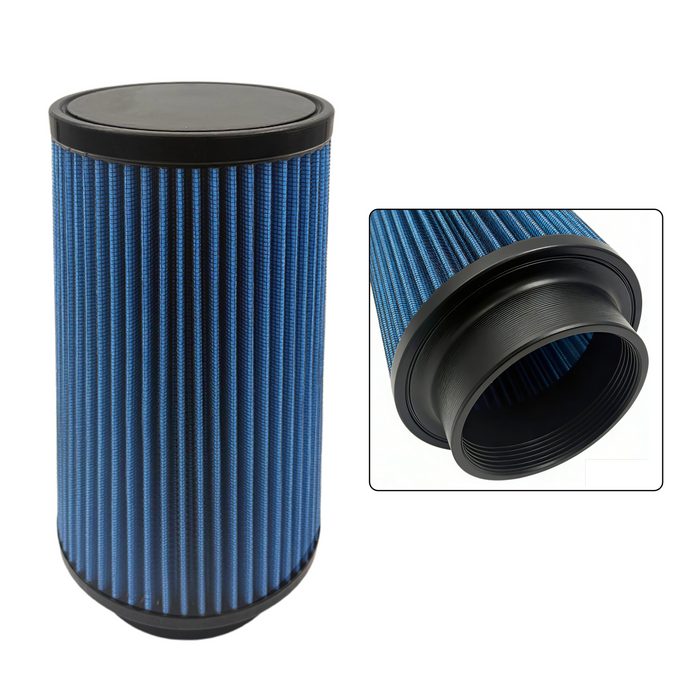
Once the tune is asking for more air, the factory airbox and the necked-down intake elbow become the restriction — especially on the 6.7 Powerstroke, where the factory elbow is a known choke point. A quality intake or high-flow elbow adds little on its own, but it’s what lets the tune reach the numbers it’s actually capable of.
The Exhaust Earns Its Keep Next
Lowering backpressure — usually with a 4-inch system — lets the turbo spool faster and drops EGTs under sustained load, which is exactly what you want when towing. The catch is sizing: pipe bigger than the turbo outlet is just noise.
Fuel and Turbo Hardware Is the Deep End
Lift pumps, bigger injectors, and upgraded turbos are where the big power lives, but they’re also where costs and failure risk climb fast. They only make sense after the tune, intake, and exhaust have been pushed as far as they’ll go.
What Wastes Money on a Diesel?
Most “power” products sold to diesel owners don’t add power. They add noise, weight, or risk — and a few actively shorten engine life.
Here’s the do-not-buy list:
- Big exhaust with a stock turbo. A 5-inch pipe behind a factory turbo just changes the sound. The turbo’s outlet is the real restriction; the pipe after it isn’t.
- Hardware stacking without a tune. Intake, exhaust, and an intercooler bolted on without a calibration changes nothing — and can trigger codes. The tune is the multiplier; the parts are just multipliers’ inputs.
- Cheap intakes with poor filtration. A $60 cone filter that lets dust through is a slow engine killer. Filtration matters more than airflow on a diesel that ingests dirt for 300,000 miles.
- “Fuel saver” gadgets. Magnets, vortex inserts, and hydrogen generators are scams. No credible test has ever shown a gain.
- Over-tuning for the parts you don’t have. A hot tune on a stock fuel system and transmission is a repair bill waiting to happen.
What Order Should You Do Mods In?
Diagnose the bottleneck first, then tune, then intake, then exhaust, then hard parts. Almost every expensive mistake comes from doing this backwards.
The correct sequence:
-
Diagnose the bottleneck. Log boost, rail pressure, and EGTs. A truck down on power from a boost leak or a clogged filter won’t be fixed by any mod — it needs a repair first.
-
Tune. This is step one because it’s the highest ROI and everything after it is calibrated around it. Re-tuning after you change hardware is normal.
-
Intake. Once the tune is asking for more air, the stock airbox becomes the next restriction. This is where a quality intake or intake elbow earns its keep.
-
Exhaust. Lower backpressure lets the turbo breathe and drops EGTs under load. Do it after the intake, not before.
-
Fuel and turbo hardware. Lift pumps, bigger injectors, and upgraded turbos are the last step — they’re expensive and only worth it once the bolt-ons and tune have hit their ceiling.
Get the order wrong and you’ll re-tune twice, replace parts that were never the bottleneck, and spend double for the same result. The sequence is the whole game — skip a step and every dollar after it under-delivers.
How Much Power Do You Get Per Dollar?
The numbers below are not marketing claims — they’re compiled from three traceable sources: manufacturer stock ratings, tuner stage ratings, and owner-reported dyno results from 2023–2025. Your result depends on the truck’s health and how aggressive you’re willing to tune.
| Upgrade path | Powerstroke 6.7 | Cummins 6.7 | Duramax 6.6 L5P |
|---|---|---|---|
| Tune only | +50–100 HP | +60–150 HP | +75–150 HP (ECM unlock cost) |
| Tune + intake + exhaust | +100–180 HP | +150–250 HP | +150–250 HP |
| + fuel/turbo (full build) | +180–300 HP | +250–400 HP | +250–400 HP |
Two things stand out: the tune is the only cheap win, and the L5P Duramax costs more to enter because its encrypted ECM needs an unlock before any calibration takes. The 6.7 Cummins is the cheapest platform per horsepower — its CP3 pump and open tuning ecosystem make it the most mod-friendly of the three.
Which Mods Are Legal, and Which Aren’t?
Anything that removes or disables emissions equipment — EGR, DPF, DEF/SCR — is not legal on a public-road truck. Performance mods that keep the emissions intact generally are.
The honest split:
-
Legal (keep emissions): A conservative tune that doesn’t disable monitors, a quality intake, a cat-back or factory-compatible exhaust, and supporting mods like a lift pump.
-
Not legal on-road: Any delete hardware or delete tune. These violate the Clean Air Act (42 U.S.C. § 7522) and carry fines up to $5,911 for individuals, plus inspection failures in regulated states.
The practical takeaway: a conservative tune, a real intake, and a properly sized exhaust will get you most of the available power on any of the big three platforms without touching a single emissions component. The delete route only adds power on paper — the tune does the work either way.
The punchline: you don’t need to delete anything to make real power. A well-tuned, emissions-intact 6.7 will outrun most stock trucks by a wide margin.
What Power Can Each Diesel Truck Realistically Make?
Each platform has a different ceiling and a different set of weak links. Here’s what to expect at each stage, so you don’t build past what the rest of the truck can hold.
| Platform | Stage 1 (tune) | Stage 2 (+bolt-ons) | Ceiling to watch |
|---|---|---|---|
| Cummins 6.7 (CP3 era) | +60–150 HP | +150–250 HP | Transmission first |
| Powerstroke 6.7 (CP4.2) | +50–100 HP | +100–180 HP | CP4 pump + transmission |
| Duramax 6.6 (L5P) | +75–150 HP | +150–250 HP | ECM cost + Allison ~500whp |

The pattern across all three: the engine is rarely the first thing to break — the fuel pump and the transmission are. The 6.7 Powerstroke’s CP4.2 pump is the one to plan around; the 6.7 Cummins and L5P both have transmissions that limit you well before the bottom end does.
What Are the Five Most Expensive Modding Mistakes?
Most wasted diesel money isn’t spent on a bad part — it’s spent in the wrong order, or on the wrong goal. These five mistakes cost more than any single upgrade.
- Buying hardware before tuning. Parts without a calibration are paperweights. Tune first, then match parts to it — not the other way around.
- Chasing peak horsepower instead of the curve. A dyno number at 3,800 RPM doesn’t tow a trailer. The torque curve — and where it comes on — is what you actually feel.
- Ignoring the transmission and clutch. Add 150 lb-ft to a stock transmission and it’ll slip, burn, or leave you stranded. Budget for trans tuning or a rebuild before you go big.
- Buying no-name cheap parts. A $60 filter that doesn’t filter, or a knock-off tuner with a bad file, costs more in repairs than you ever saved.
- Skipping fitment and fuel-system safety. On a 6.7 Powerstroke, the CP4.2 pump is a known failure point — a CP4 disaster prevention bypass kit protects the fuel system before you lean on it with more power.
Frequently Asked Questions
What’s the cheapest way to add power to a diesel?
A tune. For $400–$1,000 you can unlock 40–120 HP that the factory calibration left on the table. Nothing else comes close on a cost-per-horsepower basis.
Does a cold air intake actually add power?
A little — maybe 5–15 HP on its own. Its real value is supporting a tune by removing an airflow restriction and dropping intake temps. Alone, it’s mostly throttle response.
Do I need a tune to gain power?
For any meaningful gain, yes. Hardware alone changes almost nothing because the ECM is still commanding the old fuel and boost targets. The tune is the multiplier; parts are just inputs to it.
What’s a waste of money on a diesel?
Big exhaust behind a stock turbo, hardware stacked without a tune, cheap poorly-filtering intakes, “fuel saver” gadgets, and over-tuning past what your fuel system and transmission can hold. All five cost money and return nothing.
How much power can I safely add?
On a healthy truck with a mild tune, +50–100 HP is usually safe long-term. Push past that and you’re into supporting-mod territory — transmission, fuel pump, and cooling — or you’re gambling on the weak link.
Is a delete kit the best way to add power?
No. A delete removes restriction, but the power comes from the tune — and you can tune an emissions-intact truck for big gains too. A delete is a legality and warranty question, not a power shortcut.
What supporting mods do I need?
Before big power: a quality intake, a lower-backpressure exhaust, a transmission tune, and — on a 6.7 Powerstroke — CP4 protection. The supporting mods are what keep the power from breaking something.
Does a bigger exhaust add power?
Only if the stock exhaust is the restriction. A 4-inch upgrade behind a stock turbo helps a little; a 5-inch system behind the same turbo just gets louder. Match pipe size to your power target.
How much should I spend for 100 HP?
With a tune plus intake and exhaust, figure $1,000–$2,000 for roughly 100 HP on most platforms. On the L5P Duramax, add the ECM unlock cost on top.
Will mods hurt reliability?
A conservative tune with supporting mods can be as reliable as stock. An aggressive tune without supporting mods — that’s where cracked pistons, slipped transmissions, and fuel-pump failures come from.
What mods should I do first?
Diagnose the bottleneck, then tune, then intake, then exhaust, then fuel/turbo hardware. That order maximizes every dollar and avoids re-tuning after each change.
Can I add power legally?
Yes — a conservative tune that keeps emissions monitors intact, a quality intake, and a compatible exhaust are all legal. Anything that deletes or disables emissions equipment is not, and carries real legal and inspection risk.
Get the Right Parts for Your Truck
Power done right is a sequence, not a pile of parts — tune first, then the intake and exhaust that support it, then the fuel-system protection that keeps it from breaking. Start with the tune and the supporting mods that match your truck, and you’ll spend less per horsepower than the guy who bolted on a big exhaust first.
Browse the full diesel performance lineup at TruckTok.com, and see what other owners are running:
- 6.7L Powerstroke Cold Air Intake
- 2013–2018 Ram 6.7L 4" Exhaust Pipe Kit
- H&S Mini Maxx DPF Delete Tuner
- TruckTok Forum — real owner installs and dyno results

Legal Disclaimer
For off-road / competition use only. Not legal for on-road use in emissions-regulated areas. Check your local, state, and federal laws before modifying any emissions-related component.