

Home > News > How Often Should You Change a Cabin Air Filter in Dirt Roads?


How Often Should You Change a Cabin Air Filter in Dirt Roads?
A cabin air filter on a dirt-road truck can clog in 3,000 miles — one-fifth of the manufacturer’s 15,000-mile interval. Weak airflow, musty smells, fogged windows, and a layer of dust on the dash are all signs the filter gave up weeks ago. This guide covers what actually governs filter life when you work off-pavement, how to spot a filter that’s done before the schedule says it is, and why a premium electrostatic or activated-carbon filter earns its cost when you’re replacing it every other oil change.
What a Cabin Air Filter Actually Does
The cabin air filter sits between the outside world and your lungs. Every cubic foot of air that comes through the vents — hot, cold, defrost, recirculate or not — passes through it. On a diesel truck, that means the filter is catching road dust, diesel soot, pollen, mold spores, construction-site particulate, and in agricultural areas, crop dust and fertilizer fines.
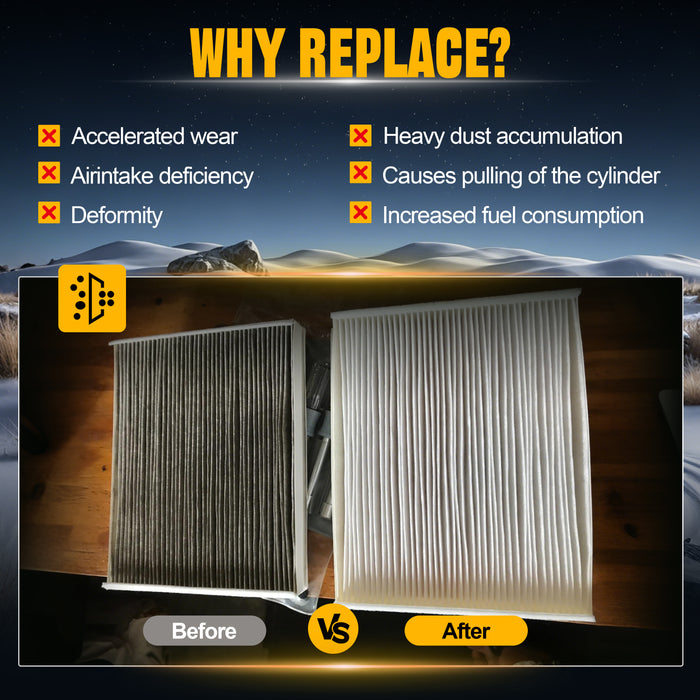
When the filter is fresh, none of that reaches the cabin. When it’s clogged, three things happen at once:
Airflow Drops.
The blower motor works harder to push air through packed media. You crank the fan to max and barely feel it. AC performance suffers because there’s less air moving across the evaporator coil. Defrost takes longer because the windshield isn’t getting enough volume.
Moisture Gets Drapped.
A loaded filter holds moisture from condensation and rain. That moisture, combined with trapped organic debris, creates exactly the environment mold and bacteria need. The musty smell when you first turn on the AC is mold growing in the filter media.
Filtration Bypasses
When the pressure drop across a clogged filter gets too high, air finds another path — around the edges of the filter, through gaps in the housing, or through a tear in the media. At that point, unfiltered air is entering the cabin, and the filter is doing nothing except restricting flow.
The Noise Tells You First
A clogged cabin air filter doesn’t just feel different — it sounds different. As larger particles pack the media and airflow chokes, the blower motor strains against the restriction. You’ll hear a high-pitched whistle or whine from behind the dashboard, especially at higher fan speeds.
The Factory Interval vs. the Dirt Road Interval
Manufacturers typically recommend replacing the cabin air filter every 12,000 to 15,000 miles or once per year, whichever comes first. That interval was validated in suburban and highway driving conditions. Here’s what actually happens when you deviate from pavement:
| Driving Environment | Realistic Replacement Interval | Why |
|---|---|---|
| Pavement only, city/highway | 12,000–15,000 miles | Factory baseline |
| Mixed pavement + occasional gravel | 8,000–10,000 miles | Intermittent dust loading |
| Regular dirt/gravel roads | 5,000–8,000 miles | Constant fine particulate |
| Job sites, harvest, dry trails | 3,000–5,000 miles | Heavy airborne dust daily |
| Visible dust in cabin, weak airflow, odor | Replace immediately | Already failed |
Most diesel trucks run a 5,000–7,500-mile oil change interval under severe service, and checking the cabin filter at every other oil change keeps it from ever reaching the clogged stage.
Six Signs Your Cabin Air Filter Is Already Done
You don’t need to pull the filter to know it’s overdue. These five signs are recognizable from the driver’s seat, and any two of them together means the filter needs to come out:
1. The Fan Is On High But the Airflow Is Weak
This is the most universal sign. You’ve got the blower set to four or five and it sounds like it’s working, but the vents are barely pushing air. The fan is spinning; the filter is the bottleneck.
2. A Musty Smell Comes Through The Vents
Mold and bacteria colonize a damp, loaded filter within days. The smell is strongest right after the AC kicks on because stored moisture is being pushed through the colony.
3. The windows Fog Up and Won’t Clear.
Defrost mode needs volume, not just heat. A clogged filter starves the windshield of airflow, and the moisture trapped in the filter media makes the problem worse by adding humidity to the air that does get through. If your defroster used to clear the windshield in 30 seconds and now takes three minutes, check the filter first — not the HVAC system.
4. A Film of Dust Settling On The Interior Surfaces.
When the filter media is saturated, airflow bypasses it. The dust that should be trapped in the filter is landing on your gauge cluster instead. If you wipe the dash on Monday and there’s a visible layer by Friday, the filter is either clogged, improperly seated, or the wrong grade for your conditions.
5. A Whistling or Loud Whine From Behind the Dash
This sign is underrated. A healthy HVAC system is quiet — you hear air moving, not the blower struggling. When the filter clogs, the fan motor strains against the restriction and produces a high-pitched whistle or a noticeably louder hum. If your AC sounds louder at fan setting three than it used to at setting four, the filter is the first thing to check.
6. Allergy Symptoms Appear Inside The Truck
If your eyes water, your nose runs, or you start sneezing when you get in the truck and it stops when you get out, the cabin filter is passing pollen and mold spores straight through.
2017-2026 6.7L Ford Powerstroke Diesel Cabin Air Filter
A quality electrostatic filter — like the 2017–2026 6.7L Ford Powerstroke Cabin Air Filter with premium multi-layer electrostatic fiber media.
- Captures 99% of airborne pollens, dust, mold, and debris — stops those particles before they enter the cabin.
- Its uniform pleats maximize surface area so you get unrestricted fresh air for optimal AC, defrost, and heating volume.
- It directly replaces Motorcraft FP79, Wix WP10266, Baldwin PA10103, and others, and the step-by-step forum install guide walks through the glove-box-access swap in under five minutes.
Paper vs. Electrostatic vs. Activated Carbon: What You’re Actually Paying For
Cabin air filters come in three performance tiers, and the price difference reflects real differences in what they trap:
Basic Paper/Cellulose (Dust Filter)
The cheapest option — $12–$20. Traps visible dust and larger pollen particles. Does not absorb gases, odors, or sub-micron particulate. On a dirt-road truck, paper loads up fast, traps moisture, grows mold, and needs replacement before 5,000 miles.
Electrostatic/Synthetic Media (Anti-Allergen Filter)
Uses synthetic fibers with an electrostatic charge to attract and hold smaller particles including fine dust, mold spores, and bacteria. Higher dirt-holding capacity than paper, meaning it loads more evenly across the pleats instead of packing the first layer with dust. The right choice for trucks that see regular dirt but not heavy exhaust exposure.
Activated Carbon (Combination Filter)
Three layers:
- A coarse pre-filter for large debris
- An electrostatic microfiber mid-layer for fine particles (down to 1 micron)
- An activated carbon layer — typically coconut-shell charcoal — that absorbs harmful gases, diesel exhaust fumes, sulfur dioxide, and volatile organic compounds

This is the filter that matters for a diesel truck: idling in traffic or at a job site means your HVAC intake is pulling from a cloud of exhaust, and the carbon layer is the only thing that stops those gases from reaching the cabin.
HEPA
For reference, the gold standard in filtration — HEPA — removes 99.97% of particles 0.3 microns and larger. While automotive cabin filters don’t typically meet full HEPA certification, premium electrostatic and carbon filters approach similar real-world performance for the particle sizes.
2010–2024 6.7L Dodge Ram Cabin Air Filter
The 2010–2024 6.7L Dodge Ram Cabin Air Filter combines activated carbon with electrostatic non-woven fabric to absorb harmful gases, exhaust fumes, and road odors that a plain paper filter passes straight through.
- Its rigid perimeter frame prevents warping during installation for a 100% tight seal. T
- The high-airflow media ensures peak ventilation and rapid temperature control without restricting AC or heater performance.
- Install takes minutes following the forum installation guide
- It replaces 68406048AA, 68535623AA, CF11671, and over a dozen other OEM and aftermarket part numbers.
Why a Premium Filter Pays for Itself on Dirt-Road Trucks
A basic paper cabin filter costs $12–$20 and will do the job on pavement. On a dirt road, it loads up fast, traps moisture, grows mold, and needs to be replaced before you’ve hit 5,000 miles. A premium filter costs more upfront but does three things that matter when you’re changing it every other oil change:
Holds More Debris Before Clogging
Electrostatic and synthetic-blend media have higher dirt-holding capacity than plain cellulose paper. More pleats and deeper channels mean the filter loads evenly across its surface instead of packing the first few pleats with dirt while the rest stays clean.
It Filters Smaller Particles
A basic filter catches visible dust. A premium electrostatic filter — especially one with activated carbon — catches the sub-micron particles you can’t see: diesel soot from the truck in front of you, exhaust fumes, road tar volatiles, and construction-site silica dust.
Protects the Blower Motor
A clogged cabin filter doesn’t just reduce airflow — it strains the blower motor. The fan works against increasing backpressure every mile the filter loads up. Eventually the motor overheats and fails. A blower motor replacement runs $300–$500 in parts and labor. A premium filter that loads evenly and gets replaced on schedule costs $25–$50.
Trucks That Didn’t Come with a Factory Cabin Filter
Not every diesel truck left the factory with a cabin air filter. The 2007–2014 GM Silverado and Sierra platform is the most notorious example — the HVAC housing has the slot for a filter, but GM shipped these trucks without one installed. Road dust, pollen, and debris entered the cabin through an unfiltered opening ahead of the blower motor, and drivers lived with it.
2007-2014 Silverado Sierra Cabin Air Filter
The fix is straightforward: the housing was designed for a filter, so you add one. The 2007–2014 Silverado Sierra Cabin Air Filter is a direct-fit retrofit.
- Leverages advanced electrostatic technology to block 95% of harmful outside pollutants.
- The filter dense non-woven composite media captures seasonal pollen and dirt without restricting airflow.
- The structured layered pleat layout ensures superior debris capacity and long-lasting performance.
For a truck that has been breathing unfiltered air for a decade, installing this filter restores crisp, healthy cabin air immediately and prevents road dust from settling on the dashboard — something the factory never bothered to address. The installation guide on the TruckTok forum covers the access panel removal under the passenger-side dash with photos for every step.
How to Change a Cabin Air Filter in Under 5 Minutes
A cabin air filter is one of the easiest DIY replacements on any truck. If you can change a windshield wiper, you can change a cabin filter. No tools required on most models. Here’s the universal sequence:
-
Locate the filter. On most trucks built after 2000, it’s behind the glovebox. Open the glovebox, push the side tabs inward to release the stops, and let it drop down completely. On some models, the filter is under the hood near the cowl at the base of the windshield.
-
Remove the access panel. Behind the glovebox, you’ll see a rectangular plastic cover — it either snaps off or has a couple of tabs. Pop it open.
-
Pull the old filter. Slide it straight out. Be careful not to shake it — everything trapped in those pleats will billow into your face and cabin if you do.
-
Clean the housing. Before inserting the new filter, use a handheld vacuum or a damp rag to clear out any debris, leaves, or dust in the filter slot.
-
Install the new filter. Check the airflow arrow printed on the filter frame — it points toward the blower motor, which is usually downward or rearward. Slide it in, snap the cover back on, and reinstall the glovebox.
Pro tip: If you’re paying a shop to do this, ask to see the old filter before they install the new one. A visual inspection takes five seconds — if it’s still white and clean, you don’t need a replacement yet.
How to Make a Cabin Filter Last Longer
Even with the best filter, dirt roads accelerate wear. These four habits stretch the interval:
-
Switch to recirculate on visible dust sections. If you can see dust in the air ahead of you, hit recirculate. The filter can’t stop what doesn’t enter the system. Just remember to switch back to fresh air once you’re clear — recirculate traps moisture and fogs windows over long stretches.
-
Tap the filter out at every oil change. Pull the filter, hold it over a trash can, and tap the dirty side against the rim. A surprising amount of loose dust falls out. This doesn’t restore the filter, but it removes the surface load that causes the most airflow restriction.
-
Check the cowl drain. The plastic tray at the base of the windshield collects leaves, pine needles, and debris. If the drain plugs, water pools and gets pulled into the HVAC intake. A wet filter is a failed filter.
-
Replace the filter before winter. A filter that’s been loading up all summer and fall will be saturated by November. Cold weather makes the media stiffer and more prone to bypass, and defrost demand is highest in winter. Put a fresh filter in before the temperature drops and you’ll have full airflow when you need it most.
Conclusion
The factory says every 12,000 to 15,000 miles. Your dirt road says otherwise. If your truck works off-pavement, swap the cabin filter at least every other oil change — and swap to a premium filter that’s built for the dust load you’re actually throwing at it.
A basic paper filter works on pavement. On dirt, it loads fast, traps moisture, grows mold, and stops filtering before you remember to check it. TruckTok.com stocks premium cabin air filters with electrostatic media and activated carbon layers for Ford Powerstroke, Ram Cummins, and GM Duramax platforms — direct OEM fitment, rigid frames that seal right the first time, and forum install guides that walk you through the swap in minutes.
FAQ About How Often Change a Cabin Air Filter
Q1: Can I clean and reuse a cabin air filter?
A1: No. Cabin air filters are disposable by design. Tapping out loose debris extends the interval slightly, but washing, vacuuming, or blowing compressed air through the media damages the fiber structure and reduces filtration efficiency. Once a filter is visibly loaded or has been in service for 6+ months on dirt, replace it.
Q2: How do I know if my truck even has a cabin air filter?
A2: Check behind the glove box. Most trucks from 2010 onward have a cabin filter behind a plastic access panel that pops off without tools. On some older models — notably the 2007–2014 GM HD platform — the slot exists but the filter was never installed from the factory. If there’s an empty slot, a retro-fit filter drops right in.
Q3: Does a dirty cabin filter affect engine performance or fuel economy?
A3: No. The cabin filter and the engine air filter are separate systems. A clogged cabin filter only affects HVAC performance — airflow, cooling, heating, and defrost. It does not impact engine power, fuel consumption, or emissions. That said, if your cabin filter is that dirty, check the engine air filter too. Both see the same dust.
Q4: How often should I replace the filter if I only drive dirt roads on weekends?
A4: Start with every 6 months or 6,000 miles and adjust based on what you find when you pull it. If the filter still looks clean at 6 months, you can stretch to 8. If it’s packed solid at 3 months, you’re running in heavier dust than you realized and need to shorten the interval. Let the filter’s actual condition be your guide, not the calendar.
Q5: Is an activated carbon filter worth the extra cost on a diesel truck?
A5: Yes, for three reasons specific to diesel operation. One, diesel exhaust contains particulates and gases that plain media doesn’t absorb — activated carbon does. Two, idling in traffic or at a job site means your HVAC intake is pulling from a cloud of exhaust. Three, diesel fuel and DEF spills on pavement release volatile compounds the carbon layer captures.
Q6: Can I install a cabin air filter myself, or does it require a shop?
A6: A cabin filter is one of the easiest DIY replacements on any truck. No tools required on most models. Total time: under five minutes, including pulling the old filter and cleaning the housing. If you can change a windshield wiper, you can change a cabin filter.
Q7: Why does my AC sound louder than it used to?
A7: A high-pitched whistle or whine from behind the dashboard, especially at higher fan speeds, is a classic sign of a clogged cabin filter. The blower motor is straining against the restriction. Replace the filter and the noise usually disappears immediately. If you ignore it, the blower motor eventually fails — a $300–$500 repair that starts with a $20 filter.
Q8: Should I change the cabin filter and engine air filter at the same time?
A8: Yes. They breathe the same air. If your cabin filter is loaded with dirt-road dust, your engine air filter saw the same conditions. Changing both as a set at every other oil change takes under ten minutes and costs $30–$60 total. It’s the most efficient way to keep both sides of your truck’s air system clean.