
Home > News > 2007-2012 6.7L Cummins DPF and EGR Delete — The Full Kit Guide



2007-2012 6.7L Cummins DPF and EGR Delete — The Full Kit Guide
A full delete on a 2007-2012 6.7L Cummins removes two emissions systems — the EGR cooler/valve and the DPF — plus the throttle valve, and optionally the CCV oil-vapor path. It’s the simplest delete of any 6.7L because this generation has no DEF/SCR system (that arrived in 2013), so there’s no DEF hardware to disable or remove.
For off-road / competition use only. Not legal for on-road use in emissions-regulated areas. Check your local, state, and federal laws before modifying any emissions-related component.
Why Is 2007-2012 the Easiest 6.7L Cummins to Delete?
It’s the Pre-DEF Generation
From 2007.5 through 2012, the Ram 6.7L ran EGR and DPF only — no selective catalytic reduction, no DEF tank, no NOx-absorbing catalyst to program around. That leaves a two-system job instead of a three-system one, which is exactly why these trucks are known as the delete “sweet spot.”
The Reliability of the Engine Itself
Underneath the plumbing sits a cast-iron deep-skirt block with six head bolts per cylinder, a Bosch CP3 injection pump (the reliable one, not the CP4.2 that came in 2019), and a Holset HE351VE variable-geometry turbo. The hard parts are proven — it’s the emissions stack bolted on top of them that caused the headaches.
What Exactly Does a Full Delete Kit Remove?
A complete 2007-2012 kit pulls four things, and each one matters for a different reason.
The DPF and Catalytic Converter
The diesel particulate filter traps soot, then “regenerates” by dumping raw fuel into the exhaust stroke to hit 1,000°F+ and burn it off.
The outcome: On a truck that does short trips or idles, that passive burn never completes — soot backs up, backpressure climbs, and the truck forces an active regen every 200-300 miles, wasting fuel and spiking exhaust gas temperature (EGT). The delete replaces the DPF and CAT with a straight 4-inch mandrel-bent race pipe, eliminating the regen cycle entirely.
The EGR Cooler and Valve
The exhaust gas recirculation system routes soot-laden exhaust back into the intake to lower combustion temperature and cut NOx.
The outcome: On the first-generation 6.7L, the EGR cooler has the highest failure rate of any 6.7L platform — the stacked-plate cooler cracks under heat cycling and leaks coolant into the intake, a classic white-smoke-and-lost-coolant failure. The delete removes the cooler and valve and blocks both ports.
The Throttle (Butterfly) Valve
This is the piece most owners don’t realize is there. The intake throttle valve exists almost entirely to support EGR and regen — it partially closes to force more exhaust into the intake and drive EGTs up. Once the EGR and DPF are gone, that valve is a pure airflow restriction, so the kit swaps it for a smooth high-flow delete tube.
The CCV Reroute (Choosable)
The crankcase ventilation system feeds oily blow-by vapor back into the turbo inlet, where it mixes with soot to form the sticky intake sludge nobody wants. The 2010-2012 kit adds a CCV reroute that vents that vapor away from the turbo — keeping the compressor wheel, intercooler, and intake runners dry.
What Goes Wrong on a Stock 2007-2012 6.7L Cummins?
Understanding the failure chain is what justifies the delete. Four things stack up on these trucks:
-
Frequent, incomplete regeneration. Short-trip and city driving never gets the exhaust hot enough for passive regen, so the truck burns extra fuel forcing active regens — and still ends up with a soot-loaded DPF.
-
Fuel dilution. This is the pre-DEF generation’s signature problem. Because there’s no SCR to share the NOx-reduction load, the regen cycle runs richer, and unburned fuel washes past the rings into the oil pan.
-
EGR cooler cracks. The first-gen cooler is the weakest link — it leaks coolant into the intake, and by the time you see white smoke the damage is already spreading.
-
VGT actuator carbon buildup. The HE351VE’s variable-geometry mechanism gums up with soot, throwing boost codes and killing response.
None of these are the engine’s fault. Delete the emissions stack, and all four go away at once.
Does Deleting Add Horsepower?
No — the delete itself doesn’t add power. The tune does. This is the single most misunderstood thing about a 6.7L delete. Removing the DPF and EGR frees up airflow and drops backpressure, which helps the turbo spool faster and run more efficiently. But the actual horsepower and torque gains come from the calibration.
How Do You Tune a Deleted 6.7L?
Whichever kit you pick, the tune is the non-negotiable half of the job — the hardware won’t do anything without the calibration to back it up. Two tuner paths cover these trucks, and the difference comes down to how you want to load and manage the tune.
2007.5-2017 6.7L Cummins Mini Maxx Tuner-V2:
The Mini Maxx V2 is the classic handheld device — you plug it into the OBD-II port and work through a physical screen with shift-on-the-fly levels (Stock, Tow, Street, Performance) and real-time gauges for boost, EGT, and coolant temp. It covers 2007.5-2017 and is the straightforward, no-phone-required option.
2007.5-2021 6.7LCummins Ez Lynk-Auto Agent 3 Tuner:
The EZ Lynk Auto Agent 3 is the cloud-and-phone path — it plugs into the OBD-II port and pairs with your smartphone over Wi-Fi, so tune files load wirelessly through the app and a remote tuner can make adjustments without the truck sitting in front of them. It supports the same shift-on-the-fly levels plus transmission calibration, and covers 2007.5-2021.
What MPG and EGT Gains Are Realistic?
Keep expectations honest, because the delete market is full of inflated claims.
| Metric | Realistic Result | The Inflated Claim |
|---|---|---|
| Horsepower | +30 to +80 (from the tune) | +120-150 |
| Fuel economy | +2 to +4 MPG | +6-8 MPG |
| EGT drop | 100-200°F under load | 300°F |
| Intake temp drop | ~20°F | 50°F |
The EGT drop is the most consistently reported real-world win — removing the regen heat spikes and the soot-restricted exhaust lets the truck pull grades at a much cooler, safer temperature. Fuel economy improves mainly because you’ve stopped the regen fuel waste, not because the engine suddenly became efficient. And the oil stays cleaner longer, which is why many owners report being able to stretch their change interval back out.
Why Install a Delete Kit? The Benefits, Plainly
The case for deleting isn’t horsepower — it’s that you’re removing the exact parts that were causing the failures above. Here’s what changes once the kit is on, spelled out without the hype.
The Regen Cycle Stops — and So Does the Fuel Waste
No DPF means no more forced regenerations dumping raw fuel into the exhaust stroke. You stop losing the 1-2% fuel per regen cycle, stop the heat spikes, and stop the “cleaning exhaust filter” interruptions at the worst possible moment. For a truck that idles or does short trips, this is the single most noticeable day-one change.
The Oil Stays Clean and the Dilution Stops
This is the pre-DEF truck’s biggest hidden win. Once the regen stops washing unburned fuel past the rings, the oil no longer creeps up the dipstick or smells like diesel. Owners routinely stretch their change interval back out — the oil is doing its job instead of being diluted by the emissions system.
The EGR Cooler Failure Point Disappears
The first-gen 6.7L EGR cooler is the most expensive surprise on this platform — when it cracks, it leaks coolant into the intake, and by the time you see white smoke you’re looking at a real repair bill. Removing it takes that entire failure mode off the table permanently. There is nothing left to crack.
EGTs Drop and the Truck Runs Cooler Under Load
With the soot-restricted exhaust and the regen heat spikes gone, exhaust gas temperatures fall by 100-200°F under load. That’s the difference between pulling a grade at a safe temperature and watching the gauge climb. Cooler EGTs mean less heat stress on the turbo, the pistons, and everything downstream.
You Shed Over 60 Pounds of Dead Weight
The catalytic converter, the DPF canister, and the cast-iron/steel EGR cooler assembly are heavy. A bolt-on kit replaces them with a lightweight stainless pipe and billet plates, taking 60+ pounds off the truck — a small but real bonus, especially for an off-road build.
The Intake and Turbo Stay Clean
Remove the EGR and you stop feeding soot-laden exhaust back into the intake. Add the CCV reroute (on the 2010-2012 kit) and you stop the oil vapor too. The result is a turbo compressor wheel, intercooler, and intake runners that stay dry and carbon-free — which is why these trucks run crisper and respond faster after a delete.
The honest summary: a delete doesn’t transform the truck into something it isn’t. It removes the emissions stack that was actively working against the engine, and lets the 6.7L Cummins underneath do what it was built to do.
2007-2009 vs 2010-2012: Which Kit Fits Which Truck?
These two sub-generations aren’t identical, and you must match the kit to the year range.
For 2007.5-2009:
The earliest 6.7L trucks had the first-generation EGR cooler layout and simpler calibration. Two things to watch: 2007 was a mid-year transition, so an early 2007 with the 5.9L Cummins takes a completely different kit — the 6.7L delete only fits the 2007.5+ trucks. And these early trucks had the CAT mounted close to the firewall, which was revised in 2009.
2007-2009 6.7L Ram Cummins 4" DPF Race Pipe & EGR cooler Delete Kit
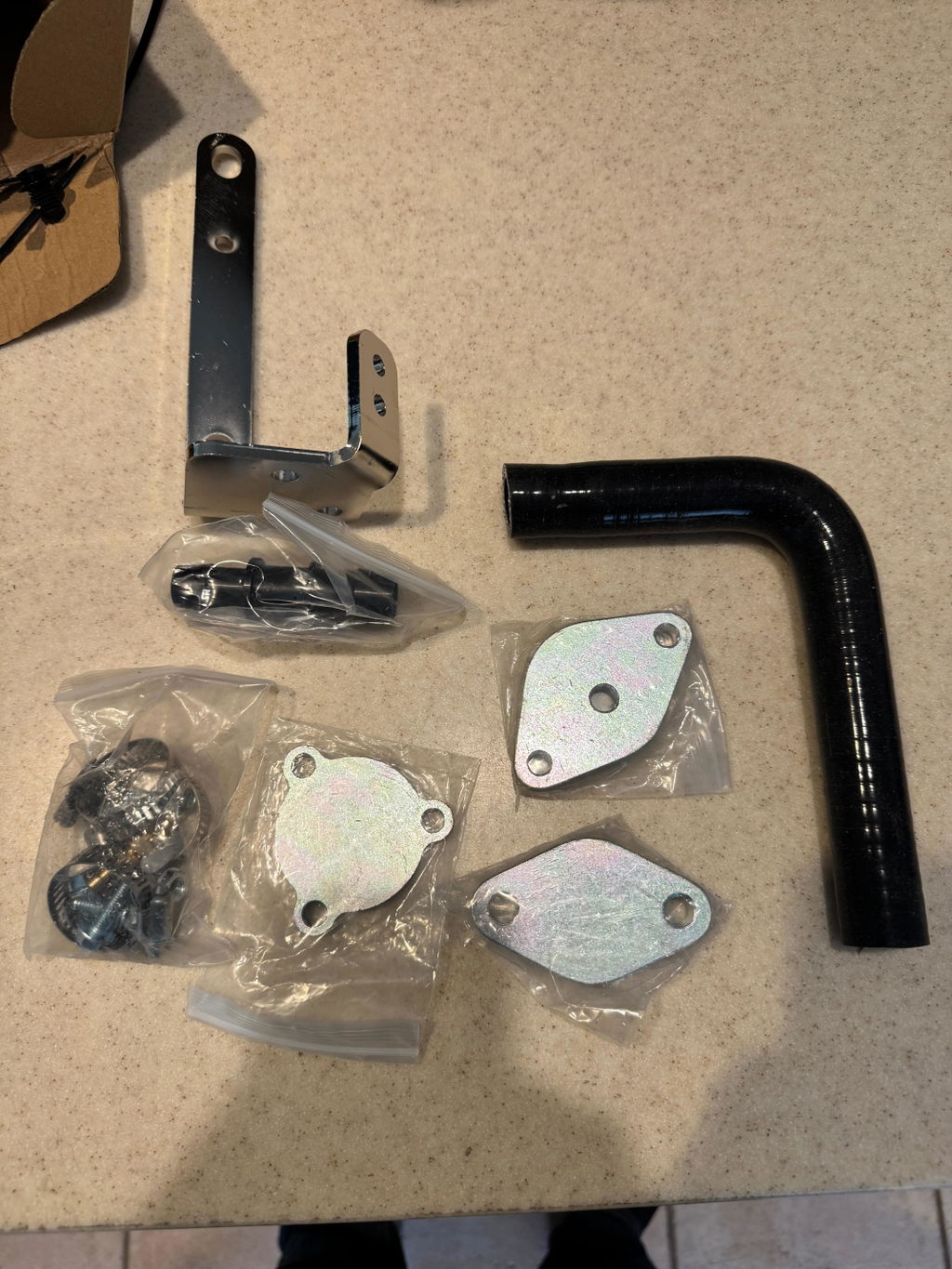
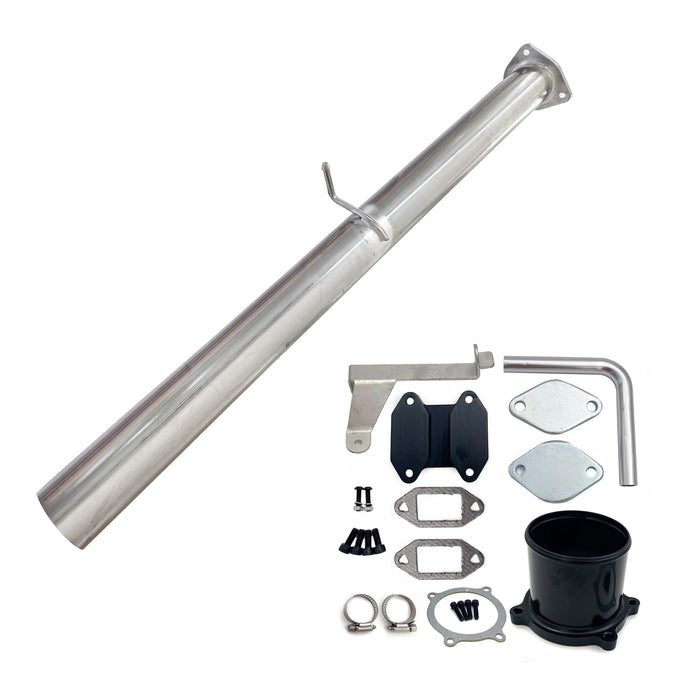
The 2007-2009 6.7L Cummins 4" DPF & EGR cooler Delete Kit bundles the three core deletes in one box: a 4" DPF/CAT race pipe, an EGR cooler delete, and a throttle valve delete. It’s a bolt-on kit with factory-style hangers and flanges — no welding, no cutting — and it drops over 60 pounds of dead weight off the truck. The EGR cooler delete removes the most common failure point on this generation, and the silicone bypass hose replaces the cooler connection so a cracked cooler can’t leak coolant into the intake.
For 2010-2012:
Ram refined the emissions calibration and EGR hardware for the 2010 model year. These trucks are widely considered the best of the pre-DEF bunch — the CP3 pump is still there, the drivability quirks were ironed out, and the layout is the one most delete kits are built around.
2010-2012 6.7L Ram Cummins 4" DPF Delete Pipe & EGR cooler Delete Kit
The 6.7L Cummins 4" DPF & EGR cooler Delete Kit is the full package for the refined second-generation trucks. It carries the same 4" race pipe, throttle valve delete tube, and EGR valve-and-cooler delete — plus a CCV reroute system that diverts oily blow-by vapor away from the turbo inlet. That fourth item is the differentiator: it keeps the compressor wheel, intercooler, and intake runners dry and oil-free, and it means you never have to replace the expensive factory internal CCV filter again.
The cleanest way to see the difference is in the two kits TruckTok builds for this generation. The 2007-2009 kit is a three-in-one — 4" DPF/CAT race pipe, EGR cooler delete, and throttle valve delete. The 2010-2012 kit is a four-in-one that adds the CCV reroute to keep the intake dry.
6.7L Cummins
If you’re on a 2007-2009 truck and want the bare minimum to stop the regen and EGR problems, the three-in-one does it. If you’re on a 2010-2012 and want the intake kept clean too, the four-in-one is the complete fix. Both need a delete tuner (EFI Live is the standard pairing) — that’s non-negotiable, and it’s covered in our complete guide to the 6.7 Cummins delete kit and tuner.
What Does a Full Delete Cost All-In?
Plan on roughly $1,200 to $2,100 for the parts alone (kit plus tuner), with a shop adding $500 to $1,000 in labor if you don’t do the wrenching yourself. That’s the honest range for a complete 2007-2012 delete, and the table below lays it out by the two kit paths.
| Component | 2007-2009 (Budget Path) | 2010-2012 (Full Path) |
|---|---|---|
| Delete kit | $228.49 (ER-0221) | $399.52 (ER-0222) |
| Tuner | $987 (Mini Maxx V2) | $987–$1,710 (Mini Maxx or EZ Lynk) |
| Shop labor (optional) | +$500–$1,000 | +$500–$1,000 |
| DIY total | ~$1,215 | ~$1,387–$2,110 |
| Installed total | ~$1,715–$2,215 | ~$1,887–$3,110 |
A few things worth pointing out in those numbers:
-
The tuner is the single biggest line item. A delete kit is $228–$400, but the tuner is $987–$1,710 — which is why some owners buy a tuner they can reuse across trucks rather than treating it as a one-truck consumable.
-
The EZ Lynk costs more than the Mini Maxx V2 because it’s a cloud-and-app platform with remote tuning support, not just a handheld. If you want remote tuner support and future upgrade headroom, the extra cost is what buys it.
-
DIY is where the savings live. The hardware is what it is, but the $500–$1,000 shop labor is the one number you can cut to zero if you’re comfortable with the install.
Put it against the alternative and the math gets interesting:
A single OEM DPF replacement runs $2,000–$5,000, and a single EGR cooler replacement runs $1,500–$2,500 — and neither one stops the other system from failing next. A full delete costs less than one of those repairs and removes both failure points permanently.
How Do You Install a Full Delete Kit?
The EGR side is a bolt-on afternoon job; the DPF side is heavier but still straightforward. The golden rule that overrides everything: flash the delete tune before you unbolt any hardware. If you pull the DPF and drive without a tune, the truck throws codes and derates within miles.
Tools You’ll Need
Gather these before you start — the exhaust hardware on a truck this age will be rusted, and you’ll save yourself an hour of running to the bench:
- Sockets and wrenches: 8mm, 10mm, 13mm, 15mm, plus 5/16" and 7/16" for the throttle valve and crossover bolts
- 5/8" line wrench (or a crescent wrench) for the pressure-sensor lines — it grips the flats without rounding them
- Ratcheting wrench and extensions for the tight bolts behind the EGR cooler
- Pry bar and flathead screwdriver for the exhaust hangers
- PB Blaster or WD-40 — spray every exhaust bolt and sensor the day before
- Drain pan for coolant, torque wrench, and a magnetic tray for the small hardware
- Ratchet strap — the DPF and CAT assembly is heavy and needs support as the last hanger comes off
Step 0: Flash the Tune First
This is non-negotiable and comes before any wrenching. Load the delete tune through your EFI Live (or equivalent) while the truck is still complete, with a battery charger on it so a voltage dip doesn’t brick the ECM mid-flash. Only once the truck confirms it’s running the delete calibration do you move to the hardware.
Step 1: Prep the Truck
Disconnect both battery negatives, then let the engine cool completely — hot exhaust hardware will burn you and cold EGR lines are easier to work. Drain enough coolant to open the EGR cooler circuit, and keep it away from belts and connectors.
Step 2: Remove the EGR Valve and Cooler
- Pull the plastic engine cover off the top of the valve cover.
- Unbolt the EGR valve with a 10mm socket and set it aside with its gasket.
- The EGR cooler is held by two bolts on the back of the manifold — these are 15mm and tight to reach. Use a ratcheting wrench with an extension and work slowly.
- Disconnect the coolant lines from the cooler, then lift it off the studs.
- Clean the mating surfaces thoroughly, then seat the block-off plates with the O-rings fully pushed into their grooves. Reuse the original nuts where the kit calls for it, and torque them evenly.
Step 3: Delete the Throttle (Butterfly) Valve
- Loosen the band clamp holding the throttle valve to the intake.
- Remove the four bolts (5/16") holding the valve — one is tucked under the manifold and needs a socket and extension.
- Bolt the smooth delete tube into place with the supplied gasket and screws.
Step 4: Pull the DPF and CAT
- Disconnect the temperature and pressure sensors — the tabs pull to the side, then push the release and pull the connector. Label each one so you know where it goes back.
- Use the 5/8" line wrench to crack the pressure-sensor lines loose; these seize and the line wrench stops you rounding the flats.
- Pop the exhaust hangers off with a flathead and some WD-40 — there are three, and one faces forward.
- Unbolt the flanges (15mm) — loosen them enough to slide the assembly back, and support the weight with a ratchet strap as the last hanger lets go.
- Wrestle the assembly down and out — it’s heavy and crusty, so PB Blaster the flanges the day before.
Step 5: Install the Race Pipe
Bolt the 4" race pipe onto the factory flanges and hangers, working front to back, then tighten everything evenly. The kit is designed to use the stock mounting points, so no welding or cutting is required.
Step 6: Finish and Verify
Refill and burp the cooling system, reconnect the batteries, and start the truck. Scan for codes — a proper install with the tune flashed first should come up clean. Take it for a short drive and re-check for exhaust leaks and coolant level.
The Three Mistakes That Come Back to Bite You
- Skipping the coolant reroute. The EGR cooler sits in the cooling circuit — block it off without rerouting the coolant path and you create air pockets and hot spots. The bypass hose in the kit is not optional.
- Flashing the tune after the hardware. Pull the DPF and drive to the tuner without the delete calibration, and the truck derates within miles. Tune first, always.
- Rushing the block-off plate seal. If the O-rings aren’t fully seated or the mating surface isn’t clean, you’ll chase a boost or coolant leak later. Take the extra five minutes on the seal.
For a deeper, bolt-by-bolt walkthrough of the EGR & DPF side, see our 6.7L Cummins DPF & EGR delete install guide.
What Does a Delete Leave Behind?
Be clear about what a delete does not fix, because it’s easy to over-promise:
- It doesn’t repair engine wear. A tired bottom end, low compression, or a worn turbo are still there after the delete — the delete just stops the emissions stack from making things worse.
- It doesn’t bulletproof the CP3. The CP3 is reliable, but a lift pump and clean fuel are still what keep it alive long-term.
- It doesn’t make it legal. See below.
The delete’s real value is reliability and predictability — no more regen interruptions, no more fuel dilution, no more EGR cooler roulette, and a cooler-running truck under load. That’s what 2007-2012 owners are actually buying.
The Legal Reality (Read This Before You Commit)
Removing emissions equipment on a vehicle driven on public roads violates the federal Clean Air Act (42 U.S.C. § 7522), with penalties up to $5,911 for individuals. There is no exemption for “off-road use” as a blanket category — the vehicle must genuinely be operated only off-road, in competition, or in a permitted exempt application. Check your local, state, and federal laws before modifying any emissions-related component, and understand that a deleted truck may fail inspection, lose warranty coverage, and be harder to sell or trade.
Conclusion: Get the Right 2007-2012 6.7L Cummins Delete Kit
If you’ve decided a delete is the right move for your off-road or competition truck, the kit you pick comes down to your year range. For 2007.5-2009, the 4" DPF Race Pipe & EGR Delete Kit covers the three core deletes in one box. For 2010-2012, the 4" DPF/EGR/CCV Delete Kit adds the CCV reroute for a complete four-in-one fix. Both are bolt-on, and both are engineered for the exact EGR and exhaust layout of this pre-DEF generation. Pair either with a proper delete tune, and your 6.7L stops fighting its own emissions system — browse the full 6.7L Cummins collection to match the rest of your build.
Frequently Asked Questions
Q1: Does a 2007-2012 6.7L Cummins have a DEF system?
No. The 2007.5-2012 trucks run EGR and DPF only, with no DEF/SCR. DEF arrived with the 2013 model year, which is exactly why this earlier generation is the simplest 6.7L to delete — there’s no DEF tank, no SCR catalyst, and no DEF dosing to disable or remove.
Q2: Does deleting add horsepower?
Not by itself. Removing the DPF and EGR frees airflow and drops backpressure, but the actual power gain comes from the tune you load afterward. The hardware makes the tune possible; the tune makes the horsepower.
Q3: Will my 2007 Ram with the 5.9L take the same kit?
No. 2007 was a mid-year transition — the 6.7L delete only fits the 2007.5+ trucks. A 2007 with the 5.9L Cummins needs an entirely different, non-emissions-delete approach, so confirm which engine you have before ordering.
Q4: Why does the 2010-2012 kit cost more than the 2007-2009 kit?
Because it’s a four-in-one rather than a three-in-one. The 2010-2012 kit adds a CCV reroute system that vents oily crankcase vapor away from the turbo inlet, keeping the intake dry. The 2007-2009 kit covers the pipe, EGR, and throttle valve without that fourth item.
Q5: What MPG improvement should I expect?
Realistically +2 to +4 MPG, and most of that comes from stopping the regen fuel waste rather than the engine becoming more efficient. Anyone promising +6 or more is overselling it.
Q6: What’s the single biggest reliability win?
Stopping the EGR cooler failure. The first-generation cooler on this platform has the highest failure rate of any 6.7L, and it leaks coolant into the intake. Removing it eliminates that failure point entirely.
Q7: Do I have to remove the throttle valve too?
Yes, if you’re deleting the EGR. The throttle (butterfly) valve exists to support EGR and regen — it partially closes to drive EGTs up. Leave it in place with the EGR gone and it becomes a pure airflow restriction that can even cause idle clatter. The kit replaces it with a smooth delete tube.
Q8: Can I install the hardware without a tune?
No. If you remove the DPF and drive without a delete tune, the truck throws codes and derates within miles. The rule is always flash the tune first, then unbolt the hardware.
Q9: Is the delete legal for a street truck?
No. Removing emissions equipment on a road-driven vehicle violates the federal Clean Air Act. These kits are for off-road, competition, or other legally permitted exempt use only — check your local laws before you touch anything.
Q10: Does the delete fix a worn-out engine?
No. A tired bottom end, low compression, or a worn turbo is still there after the delete. The delete stops the emissions stack from adding damage — it doesn’t reverse mechanical wear that’s already happened.
Q11: Why is fuel dilution worse on the pre-DEF trucks?
Because without SCR to share the NOx-reduction load, the regen cycle runs richer, and more unburned fuel washes past the rings into the oil. That’s the pre-DEF generation’s signature issue, and deleting the DPF stops the regen that causes it.
Q12: What tuner do most 2007-2012 owners use?
EFI Live is the standard on these trucks, usually through a custom tuner who writes multiple power levels — a tow tune, a mild street tune, and a hotter option. The truck runs a modest tow tune for daily driving in most cases.