

Home > News > How Much Does a 2013-2018 6.7L Cummins Delete cost in 2026?


How Much Does a 2013-2018 6.7L Cummins Delete cost in 2026?
A full 2013-2018 6.7L Cummins delete — DPF, EGR, DEF/SCR, and a tuner — costs $1,900 to $2,500 DIY or $2,300 to $4,000 shop-installed in 2026. The number everyone quotes differently because everyone is pricing a different job: a bare pipe isn’t the same as an all-in-one kit, and a driveway install isn’t the same as a shop quote with four to six hours of labor. Here’s the real breakdown.
For off-road / competition use only. Not legal for on-road use in emissions-regulated areas. Check your local, state, and federal laws before modifying any emissions-related component.
What Does a Full 2013-2018 6.7L Cummins Delete Actually Cost?
Most 2013-2018 owners land between $1,900 and $3,000 all-in.
The Spread Comes Down to Three Things:
- whether you go DIY or pay a shop.
- whether you buy an all-in-one kit or source pieces separately.
- whether your truck is a 2018 (which needs one extra tuning step).
The table below is your starting point:
| Path | Parts + Tune | Labor | Realistic Total |
|---|---|---|---|
| DIY, all-in-one kit | $1,890–$1,920 | $0 | $1,890–$1,920 |
| DIY, sourced separately | $1,300–$2,000 | $0 | $1,300–$2,000 |
| Shop-installed (typical) | $1,800–$2,500 | $500–$1,500 | $2,300–$4,000 |
The All-In-One Kit Is the Cleanest Path
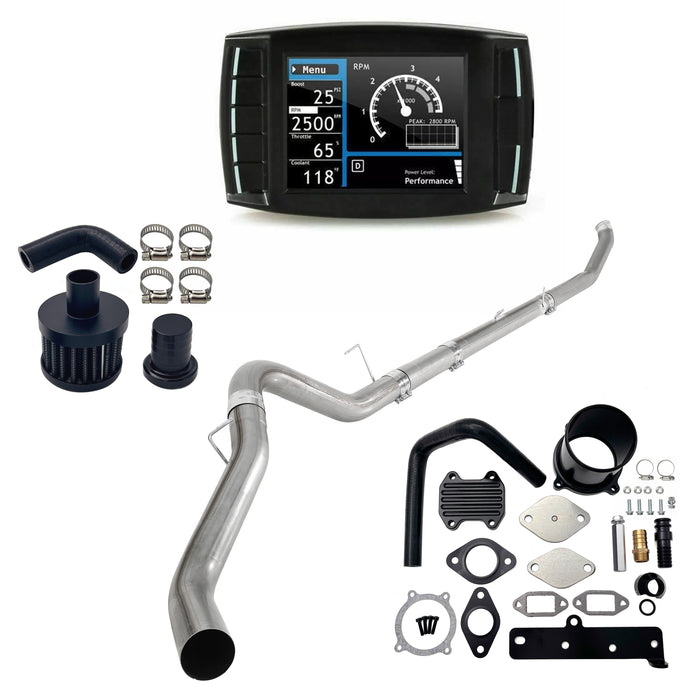
A complete TruckTok kit with a 5-inch DPF pipe, EGR valve and cooler delete, CCV delete, and a pre-loaded Mini Maxx V2 tuner runs $1,886.78 for 2013-2017 trucks and $1,918.78 for 2018 — the $32 gap is the Security Gateway bypass that only the 2018 needs.
Why Do Quotes Range From $300 to $8,000?
Because Those Quotes Are Not the Same Job
A $300 quote is a bare pipe with no tune, no EGR hardware, and no labor — it will not run the truck. An $8,000 quote is usually a shop padding a late-model ECM unlock or a full turbo-back system with custom tuning that a 2013-2018 truck simply doesn’t need. The 2013-2018 generation sits in a sweet spot: the ECM is “locked but easy to bypass,” so you pay for DEF/SCR tune complexity, not for a bench-flash unlock.
The Total Is Five Line Items Added Together
- Exhaust hardware — the delete pipe that replaces the DPF/SCR canister
- EGR hardware — block-off plates and coolant reroute
- Tuner — the device and the delete calibration (non-negotiable)
- Labor — the single biggest variable if you’re not DIY
- Incidentals — gaskets, clamps, shipping, seized-bolt repairs
Skip any one of these and the truck throws codes and derates. The pipe alone is never the whole budget.
What Does Each Component Cost?
Here’s the line-item breakdown for a 2013-2018 6.7L Cummins, spanning the honest range across current 2026 pricing.
| Component | Price Range | Notes |
|---|---|---|
| DPF/CAT delete pipe (4"–5") | $300–$800 | Aluminized $300–500; stainless $500–800 |
| EGR delete kit (valve + cooler) | $150–$600 | Basic block-off $150–250; full replacement $300–500 |
| Tuner + delete calibration | $500–$1,200 | Mini Maxx V2, EFI Live, EZ Lynk, MM3 |
| DEF/SCR handling | Included in tune | Software disable — no physical bypass pipe needed |
| CCV delete (optional) | $50–$250 | Stops oil vapor recirculating into the intake |
| Labor (if not DIY) | $500–$1,500 | 6–8 hours at $100–$150/hr |
Two points worth calling out:
-
The tuner is the single largest line item, and it is not optional — remove the hardware without a delete tune and the ECM trips DTCs and drops you into limp mode within miles.
-
The DEF/SCR system has no physical delete pipe on this platform; the tune handles it in software by disabling dosing and NOx monitoring. That’s why the 2013-2018 bundle doesn’t carry a separate “DEF pipe” line item.
Why the 2013-2018 Generation Is the Cost Sweet Spot
This generation sits in the middle: a little pricier than the 2007.5-2012 trucks that came before it, but a lot cheaper than the 2019+ trucks that followed. Three factors set that position.
The DEF/SCR Makes It Pricier Than the Older Trucks
2013 is when Ram added diesel exhaust fluid and selective catalytic reduction — the 2007.5-2012 trucks ran only EGR and DPF. That means the 2013-2018 tune has to handle DEF level sensors, NOx sensors, and SCR efficiency monitoring the earlier trucks never needed. It’s a little more tune work than a 2010.
The CP3 Pump Is Why It Stays Cheap
The 2019-2020 trucks switched to the Bosch CP4, which brought the $8,000–$12,000 metal-shaving failure mode and the disaster-prevention kits owners now buy to guard against it. The 2013-2018 runs the CP3 — the reliable pump Ram went back to — so you simply don’t budget for CP4 insurance on this generation.
The ECM Isn’t Locked Yet (2018 Is the One Exception)
A 2013-2017 truck flashes straight through the OBD-II port. The 2022+ platform needs a bench flash and ECM swap that runs $1,000–$3,000 on top of everything else. The only wrinkle is 2018, which added the Security Gateway Module — a $32 bypass cable and a PCM part-number check, not a real cost driver.
Net result: the 2013-2018 delete is the sweet spot — DEF makes it a touch pricier than the pre-DEF trucks, but the CP3 and the still-unlocked ECM keep it hundreds to thousands under the 2019+ generation.
How Much Does Labor Add — DIY vs Shop?
Labor is where the total swings the most. A full delete is a 6-8 hour job for an experienced tech, and diesel shop rates run $100–$150 per hour in most U.S. markets. That’s $500–$1,500 on top of parts.
Shop Rates Also Move With Where the Truck
The local cost of living and demand push the same job into very different labor totals:
| Region | Typical Shop Rate | Labor on a 6–8 hr Delete |
|---|---|---|
| Rural Midwest / South | $85–$110/hr | $510–$880 |
| Mid-size metros / national average | $110–$150/hr | $660–$1,200 |
| Coastal metros (CA, NY, New England) | $150–$200/hr | $900–$1,600 |
A full delete that runs about $600 in labor at a rural Kansas shop can hit $1,400 at a coastal California shop — same job, same hours, a two-to-three-times difference driven entirely by location. If you’re in a high-rate area, that gap is usually the single biggest argument for going DIY.
DIY vs Shop:
-
DIY saves the entire labor line, but costs you a full day (not an afternoon) on a first attempt, plus the risk of a coolant or exhaust leak if a connection isn’t torqued right.
-
Shop buys you a lift, proper torquing, and platform experience — a tech who knows which sensors seize and which EGR cooler bolt needs a bent 15mm wrench.
The EGR cooler removal is the slowest part. It sits high on the engine and doesn’t require draining the whole cooling system — it’s the highest coolant point on the truck — but the rear bolts are tight and the two back nuts often need a curved wrench or swivel. That’s where the hours go.
Is Deleting Cheaper Than Repairing the Factory Emissions System?
On a single component, no. On a high-mileage 2013-2018 truck with cascading failures, yes — and that’s the real math.
| Repair | Typical Cost | Fails Again? |
|---|---|---|
| DPF replacement | $2,000–$3,000 | Yes, soot and ash keep loading |
| EGR cooler replacement | $1,000–$2,000 | Yes, it clogs and cracks again |
| DEF system repair (pump/injector/NOx) | $500–$3,000 | Yes, cold-weather + heat stress |
| NOx sensor (each) | $200–$600 | Yes, there are two |
The 2013-2018 generation is known for exactly these failures. A certified Cummins tech’s honest assessment of the platform puts aftertreatment issues first, EGR clogging second, and VGT turbo actuator seizure third — and notes that these systems throw codes based on calculated values that can take hours to diagnose.
A $1,900–$2,500 delete removes all of those failure points at once, which is why it beats paying $2,000 for a DPF and then $1,500 for an EGR cooler and then $600 for a NOx sensor.
What Hidden Costs Do Owners Miss?
The advertised kit price is rarely the final bill. Budget for these:
- Gaskets, clamps, and hardware — $20–$60 if the kit ships one gasket short
- Shipping and downtime — freight runs $0–$80, but a backordered part sitting on your driveway during a work week is the real cost
- Seized bolts — northern trucks with rusted exhaust studs add shop time, and time is money
- The tune-first rule — you must flash the delete tune before unbolting hardware, or the truck derates; a 2018 also needs the SGW bypass installed first
How to Choose a Quality Delete Kit
Not every “delete kit” is the same job. Here’s what separates a complete, matched kit from a box of parts that leaves you stranded with codes.
Confirm the fitment to the Exact Year
The 2013-2018 6.7L spans two tuning eras — 2013-2017 flashes directly, while 2018 needs the Security Gateway bypass — and two body styles, pickup vs. Cab & Chassis. A kit that doesn’t match your year and configuration either won’t flash or won’t bolt up. Check pickup vs. Cab & Chassis and air-ride fitment before you order.
The Tuner Has To Be In the Box — or you don’t have a kit.
The single biggest mistake is buying “delete hardware” with no tuner. Without a delete calibration, the truck derates into limp mode. A quality kit bundles the tuner pre-loaded for the kit’s exact hardware. If the kit doesn’t include tuning, you’re buying half a job.
Look at the Material, Not Just the Price
A cheap aluminized pipe rusts out in two to four years in road-salt country; a T-409 or T-304 stainless pipe lasts the life of the truck. For a part that lives under the truck and eats winter salt, stainless is the difference between a one-time delete and a re-do in three years.
Check That the EGR Hardware Is Complete
A real EGR delete includes the block-off plates and the coolant reroute. Skip the reroute and you trap air in the cooling system and cook the rear cylinders. Kits that only ship plates and leave the coolant routing to you are setting you up for a leak.
Buy Real Specs, Not Marketing Numbers
A quality kit tells you the pipe diameter, the material grade, and the exact fitment. A kit that only promises “more power” or “lower EGTs” without a number is selling you a feeling, not a part. The 2013-2018 delete’s value is reliability — you want the hardware facts, not a dyno claim.
2013-2018 6.7L Ram Cummins 5" DPF/EGR/CCV Delete All-in-One Kit
The cleanest way to hit the honest number is an all-in-one kit that bundles the pipe, EGR hardware, CCV delete, and the tuner — so you’re not sourcing four pieces from four vendors and hoping they match.
TruckTok’s 2013-2018 6.7L Ram Cummins 5" DPF/EGR/CCV Delete All-in-One Kit covers the full job in one box:
- 5-inch DPF delete pipe — replaces the restrictive DPF/SCR canister to cut backpressure and lower EGTs
- Complete EGR valve and cooler delete — stops exhaust soot from recirculating into the intake
- CCV delete — keeps crankcase oil vapor out of the intake and turbo
- Pre-loaded Mini Maxx V2 tuner — the calibration that prevents the DEF countdown and derate
It’s $1,886.78 for 2013-2017 trucks and $1,918.78 for 2018, and it fits 2013-2018 2500/3500 pickups — it does not fit Cab & Chassis or air-ride trucks, so check your configuration before ordering. The 2018 version includes the Security Gateway bypass that year requires.
Single Items vs. the All-in-One Kit: What You Actually Save
Here’s the honest math if you price the same delete as four separate purchases instead of one box.
| Item | Bought Separately | In the All-in-One Kit |
|---|---|---|
| 5" turbo-back DPF delete pipe | $658.00 | Included |
| EGR cooler + throttle valve delete | $111.99 | Included |
| CCV delete | $31.79 | Included |
| Mini Maxx V2 tuner | $987.00 / $1,019.00 | Pre-loaded, included |
| Total | $1,788.78 / ¥1820.78 | $1,886.78 (2013–2017) / $1,918.78 (2018) |
These four items are the exact same components that ship in the all-in-one kit. Bought one by one, they add up to $1,788.78 — about $98 less than the kit. So why not just order them individually?
The kit’s Tuner Is Pre-loaded.
The all-in-one ships its Mini Maxx V2 with the delete calibration pre-configured for the kit’s exact pipe and EGR hardware — plug it in, flash, and go. Buy the tuner on its own and you’re matching the delete tune to your specific setup yourself before you can flash anything.
One Order Beats Four
Four separate purchases mean four freight charges, four boxes to track, and the small but real risk that one piece doesn’t pair cleanly with the others. The kit arrives as a single matched set with everything confirmed to work together.
The honest bottom line: if you only care about the lowest parts total, sourcing the four pieces separately saves you roughly $98. What that $98 buys in the kit is the pre-loaded tune, one shipment, and guaranteed compatibility — convenience, not markup. For most owners that’s worth the difference; for a strict budget build, the separate-parts route is there if you want it.
What a 2013-2018 Delete Won’t Do
Be clear-eyed about the limits, because this is where a lot of delete marketing overreaches.
-
It doesn’t add horsepower. The power comes from the tune you pair with the hardware, not the hardware itself.
-
It doesn’t fix a CP4 pump — because you don’t have one. The 2013-2018 runs the reliable CP3. The CP4 disaster-prevention kits are for 2019-2020 Cummins owners (and 2011+ Ford 6.7 Powerstroke owners). This generation simply doesn’t need that insurance.
-
It doesn’t repair engine wear. Worn injectors, a slipping 68RFE, or low compression are still there after the delete.
What it does do is remove the three failure points a 2013-2018 is most likely to hit — aftertreatment, EGR, and the regen cycle that dilutes oil — for less than the cost of two separate emissions repairs.
Get the Right Kit for Your 2013-2018 Cummins
The honest 2026 answer is straightforward: a full delete on this generation costs $1,900–$2,500 DIY or $2,300–$4,000 shop-installed, and the cleanest way to hit that number is an all-in-one kit that bundles the pipe, EGR hardware, CCV delete, and the tuner together.
Match the kit to your exact year — especially if it’s a 2018, which needs the Security Gateway bypass — and confirm pickup vs. Cab & Chassis fitment before you order. The all-in-one kit above covers 2013-2018 2500/3500 pickups in one box, with the tuner included.
For the full lineup of 2013-2018 6.7L Cummins delete kits, EGR hardware, and tuners — built for this exact generation and ships free — head to TruckTok.com.
If you want to know more about the 6.7L Cummins, you can check out these blogs:
- Do you need a tuner for a 6.7 Cummins EGR delete
- Best 6.7 Cummins delete kit guide
- 6.7 Cummins delete kit with tuner — everything you need to know
Legal Disclaimer
For off-road / competition use only. Not legal for on-road use in emissions-regulated areas. Check your local, state, and federal laws before modifying any emissions-related component.
Removing or tampering with emissions equipment may violate the federal Clean Air Act (42 U.S.C. § 7522) and state emissions regulations. Penalties can include fines up to $5,911 for individuals. All delete hardware discussed here is sold and intended for off-road, competition, and closed-course use only; this designation does not create a legal exemption. Confirm your local laws before modifying any vehicle driven on public roads.
Frequently Asked Questions
How much does a full 2013-2018 6.7L Cummins delete cost?
A full DPF + EGR + DEF/SCR + tuner delete runs roughly $1,900–$2,500 DIY or $2,300–$4,000 shop-installed in 2026. An all-in-one kit with a pre-loaded tuner sits at the low end around $1,886–$1,918 for parts and tune.
Do I need a tuner to delete a 2013-2018 6.7L Cummins?
Yes. The tuner is mandatory. Without a delete calibration, the ECM throws DTCs for missing DPF flow, EGR flow, and DEF dosing, and the truck derates into limp mode within miles of startup.
Why does the 2018 model cost more to delete?
The 2018 introduced the Security Gateway Module (SGW), which blocks aftermarket tuners from writing to the OBD-II port. A 2018 needs a bypass cable and PCM part-number verification before tuning, which is the $32 difference over a 2013-2017 truck.
What’s the cheapest way to delete a 2013-2018 6.7L Cummins?
The cheapest complete path is a DIY install using an all-in-one kit with a bundled tuner, landing around $1,886–$1,918. Sourcing a bare pipe and skipping the tune is cheaper up front but won’t run the truck — the tune is not optional.
How much does labor add if I don’t DIY?
Plan on $500–$1,500 for a full delete at typical diesel shop rates of $100–$150 per hour. The job is 6–8 hours, with the EGR cooler removal taking the most time.
Is it cheaper to delete or repair the factory emissions system?
On a single component, repair is cheaper. On a high-mileage truck with cascading failures, delete is cheaper — one $1,900–$2,500 delete removes the DPF, EGR cooler, and DEF failure points that would otherwise cost $2,000–$3,000 each over time.
Does deleting a 2013-2018 6.7L Cummins add horsepower?
Not by itself. The power comes from the tune you pair with the hardware, not the hardware. A mild delete tune typically adds 40–80 hp, but the delete’s real value is reliability, not dyno numbers.
Will I still get the DEF countdown warning after deleting?
No, if the tune is flashed before the hardware is removed. A proper delete calibration disables DEF dosing and NOx monitoring, which prevents the “speed limited” countdown and derate.
Does the all-in-one kit fit a Cab & Chassis truck?
No. The 2013-2018 all-in-one kit fits 2500/3500 pickups only — it does not fit Cab & Chassis (3500/4500/5500 C&C) or air-ride trucks. Confirm your configuration before ordering.
Do I need a CP4 disaster-prevention kit on a 2013-2018 6.7L Cummins?
No. The 2013-2018 runs the Bosch CP3 pump, which is reliable. The CP4 disaster-prevention kits are for 2019-2020 Cummins owners and 2011+ Ford 6.7 Powerstroke owners — this generation doesn’t need that insurance.
How long does a full 2013-2018 delete take?
Plan 6–8 hours for a full DPF + EGR delete, with the EGR cooler removal taking the most time. A shop with a lift can do it in an afternoon; a first-time home install often takes a full day.
Is a deleted 2013-2018 6.7L Cummins legal on the road?
No. Removing emissions equipment on a vehicle driven on public roads violates the federal Clean Air Act. Delete hardware is sold and intended for off-road, competition, and closed-course use only, and that designation does not create a legal exemption.