

Home > News > 2011-2016 LML Duramax DPF & EGR Delete Kit — End the 55 MPH Limp Mode
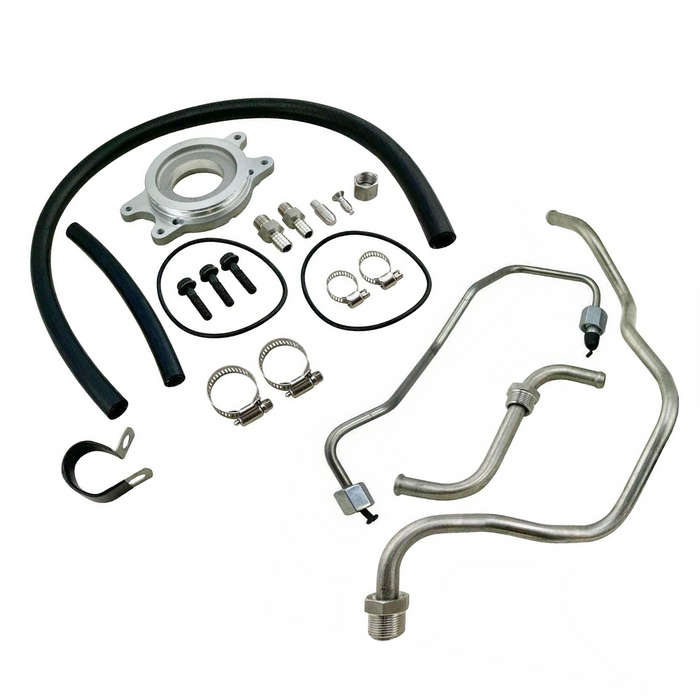
2011-2016 LML Duramax DPF & EGR Delete Kit — End the 55 MPH Limp Mode
The moment a 2011–2016 LML Duramax owner sees “Service DEF System” flash across the dash, a clock starts ticking. Ignore it long enough and the truck begins to take away speed — first capping you at 65 mph, then 55 mph, and eventually 5 mph, which is Dodge-speak for “call a tow truck.” It’s not a random glitch. It’s the emissions stack doing exactly what it was programmed to do.
And here’s the part nobody warns you about when you buy one of these trucks: the LML isn’t carrying one emissions system to go wrong. It’s carrying three — a DPF, an EGR cooler, and a full DEF/SCR setup. Any one of them can strand you, and they all age at roughly the same rate. That’s the real reason a delete kit is the most common “reliability mod” on this platform.
What the 55 MPH Limp Mode Actually Is
That speed-reduction penalty isn’t the engine protecting itself from mechanical damage the way a transmission overheat derate does. It’s the DEF system enforcing its own rules. When the ECM decides the Diesel Exhaust Fluid situation is wrong — bad quality, low level, a frozen heater, a dead NOx sensor — it starts a countdown and then progressively limits vehicle speed.
The Sequence Is What Catches People off Guard:
- First warning — “Service DEF System” or “Bad DEF Quality” message, with a mileage countdown.
- 65 mph cap — if you keep driving past the countdown.
- 55 mph cap — the one owners remember, because it makes highway driving dangerous with a trailer on.
- 5 mph cap — effectively immobilized, requiring a dealer-level reset.
The Cold-Weather Version Is The Nastiest
The DEF is roughly two-thirds water, and it freezes at a temperature well above what pure water does — which is why the LML runs three separate DEF heaters (one in the tank, one in the pump, one in the supply lines). Lose any one of them on a cold morning and a perfectly healthy engine gets locked down because a $150 heater element quit.
That’s the core argument for a delete, stated plainly: you’re not fixing a part, you’re removing an entire category of failure.
The LML Wears Three Emissions Systems — Not One
The LML (2011–2016) was the first Duramax to require Diesel Exhaust Fluid, and that addition is what separates it from every prior generation. Where the LMM (2007.5–2010) ran EGR and DPF, the LML stacked DEF/SCR on top of both.
1. The DPF (Diesel Particulate Filter)
Traps soot in a ceramic honeycomb, then periodically burns it off through active regeneration — injecting raw fuel to spike exhaust temperatures past 1,200°F for 20–40 minutes at a time. That regen is what quietly tanks your fuel economy and, on a loaded truck, beats the drivetrain with extra heat.
2. The EGR Cooler
Routes hot, soot-laden exhaust back into the intake to cut NOx, running engine coolant through a part that lives at exhaust temperatures. It’s the single most failure-prone component on the LML, and it fails in a way that has nothing to do with neglect.
3. The DEF/SCR System
Sprays urea into the exhaust ahead of a catalyst to neutralize NOx. It needs a functioning tank, level sensor, doser injector, and a pair of NOx sensors — every one of which is a documented failure point, and any one of which can trigger that 55 mph countdown.
The brutal math: owners routinely report spending $3,000–$6,000 on emissions maintenance before 120,000 miles, without ever actually solving the root problem — because the parts that replaced the failed parts are built exactly the same way and fail the same way.
The EGR Cooler: The #1 Failure That Kicks You Into Limp Mode
Of the three systems, the EGR cooler is the one that produces the most “this should be a recall” stories — and it’s also the one that throws the LML into limp mode through more than one door.
Inside the cooler, engine coolant and 1,000°F+ exhaust gas are separated by thin internal passages. Every heat cycle — especially the stop-and-go towing that LMLs are famous for — stresses those passages until they crack. When they do, the damage shows up three ways, and each one can trigger a derate:
-
Internal coolant leak into the exhaust and intake side, producing the classic sweet-smelling white smoke. Low coolant eventually becomes overheating, and sustained overheating pushes the truck into a failsafe reduced-power mode — that’s limp mode route #1.
-
EGR flow fault codes. A cracked or carbon-clogged cooler throws P0401 (insufficient flow) or P0402 (excessive flow) — and the EDC17 responds by limiting power to “protect” the engine. That’s limp mode route #2.
-
A carbon-caked EGR valve. Before the cooler even cracks, recirculated exhaust bakes the valve and intake with hard carbon. A stuck valve sets P0404 (range/performance) — limp mode route #3.
The tell matters because it’s often misread as a head gasket. Before you condemn the engine, pressure-test the EGR cooler. A factory replacement runs $800–$2,000 — and the replacement is built identically to the one that just failed, so it’s a “when, not if” repair that will eventually land you back in the same limp mode.
The DPF and Regen: From Soot Overload to Limp Mode
The DPF doesn’t fail as dramatically as the EGR cooler, but it walks the truck into limp mode on a slower, more relentless path — and it burns your fuel along the way.
Soot loading climbs fastest on short trips and idle time — the exact duty cycle of a work truck. The DPF’s only defense is active regeneration, which injects raw fuel on the exhaust stroke to spike temperatures past 1,200°F for 20–40 minutes. Two things follow:
-
Fuel economy tanks during regen. That’s fuel being burned to heat a filter instead of moving the truck — owners routinely see 1–2 MPG hits during regen-heavy cycles.
-
When a regen can’t finish, the soot stays. Every interrupted cycle (a highway exit, a stop at a job site) pushes the filter closer to full, and the 2011–2015 trucks are notorious for “runaway regen” — regenerating more than they drive.
Here’s where it ties into limp mode:
Once soot load crosses the threshold the ECM considers critical, it sets P2002 or P2463 and starts limiting power to force a service. Keep ignoring it and the truck derates — reduced torque first, then full limp mode. The DPF’s path to limp mode is quieter than a cracked cooler, but it ends in the same place.
What a Full Delete Actually Stops
Now the part that matters: what physically removing these three systems does for you.
Ends the Regen Cycle Entirely
No DPF means no filter to clog, no active regeneration, no post-injection fuel being burned to heat a canister. That fuel goes back to moving the truck. It’s the largest single fuel-economy recovery on a deleted LML.
Eliminates the EGR Cooler Failure Point
No EGR cooler means no cracked internal passages, no coolant-in-the-intake, no white smoke, no hydrolock risk. The intake stays clean long-term because you’ve stopped feeding it soot entirely.
Kills the 55 MPH Limp Mode at the Source
No DEF system means no DEF heaters to freeze, no NOx sensors to drift, no “Bad DEF Quality” countdown, no speed-reduction penalty. You can’t get a 5 mph limp mode from a system that isn’t there anymore.
Cooler Intake, Cooler EGTs
With recirculated exhaust no longer dumping heat back into the intake, intake air temperatures drop — most noticeable towing or on long grades. Cooler, denser intake air means cleaner combustion.
The Honest Numbers
-
Power: the delete itself adds little. The gains — typically +40–80 hp and +80–120 lb-ft at the wheels — come from the tune you pair with it, not from removing pipes. (A real-world LML dyno session showed a stock 309 hp / 554 lb-ft jump to 381 hp / 678 lb-ft after a full delete and tune — a 70 hp gain.)
-
Fuel economy: owners consistently report +3–5 MPG, almost entirely from eliminating active regen.
-
The delete doesn’t “make horsepower.” The horsepower was always there; the emissions hardware was spending it on cleaning itself.
The One Thing a Delete Won’t Fix: The CP4.2 Fuel Pump
Here’s the part that separates an honest guide from a sales pitch. The LML’s most famous (and most expensive) weakness has nothing to do with the emissions hardware — and deleting the DPF and EGR does not solve it.
The LML uses the Bosch CP4.2 high-pressure injection pump. It’s a notorious design: an eccentric lobe with two roller bearings that can fail and send metal shrapnel through the entire fuel system. When it grenades, the repair bill — injectors, rails, lines, pump — routinely lands at $8,000–$12,000.
Two things to be clear about:
-
The delete does indirectly help. A clogged DPF raises EGTs, which stresses the whole fuel system. Removing that backpressure takes load off the CP4.2. But that’s mitigation, not a fix.
-
The permanent fix is a CP3 conversion. The CP3 is the proven predecessor pump that Dodge ran for years before switching — and switched back to after two years of CP4 problems.
The takeaway: a delete makes the LML dramatically more reliable, but a deleted LML with a stock CP4.2 is still rolling the dice on a $10,000 pump. The smart play is delete + CP3 conversion together.
Limp Mode Has More Than One Trigger — Diagnose Before You Buy
Here’s the honest warning that saves people from spending $600+ on a delete kit that doesn’t fix their problem: limp mode is a generic protection response, and the emissions system is only one of the things that can trigger it.
The Other Triggers a Delete Won’t Fix
Fuel system problems (P0087, P0093, P1093).
Low rail pressure — from a worn CP4.2, a clogged fuel filter, a rusty sending unit sucking air, or injectors with excessive return flow — throws the truck into limp mode to protect the injectors. That’s a fuel problem, not an emissions problem.
Transmission faults (P0700, P0776, P0875).
The Allison 1000 has its own controller, and it’s a known weak point on the LML — the soldering inside can fail from engine-bay heat, and the truck will suddenly have no gears at all. Slipping clutches and transmission overheat also trigger a protective derate.
Sensor and wiring faults.
A failing accelerator pedal sensor, a skewed MAF/MAP, a broken injector harness (common on cylinders 2 and 7), or a crankshaft/camshaft sensor going bad — any of these can throw the truck into reduced-power mode. One owner chased a limp mode for six months before finding a single broken wire inside the pedal harness.
Overheating and mechanical damage.
Coolant loss, a blown head gasket, or any condition that pushes coolant past 250°F triggers a failsafe derate that has nothing to do with emissions.
How to Tell Which One You Have
The answer is the same every time: scan for codes first, then decide.
-
Emissions codes — P0401/P0402 (EGR), P2002/P2463 (DPF), P20EE (DEF/SCR) — point to the emissions stack, and a delete is the fix.
-
Fuel codes — P0087/P0088/P0093 — point to the fuel system, and the fix is a CP3 conversion or fuel-system diagnosis, not a delete.
-
Transmission codes — P0700/P0776/P0875 — point to the Allison, and no delete pipe in the world will help.
-
Sensor/electrical codes — MAF/MAP/pedal/crank codes — point to wiring, and you need a harness fix.
The rule to remember: a delete kit is the right tool for one specific job — removing the emissions systems and the limp mode they cause. If you haven’t confirmed your limp mode is emissions-related, scan first. It’s a five-minute step that can save you from spending on a kit that doesn’t address your actual problem.
Know Your Generation: The V-Band vs 3-Bolt Split
This is the single most common way LML owners buy the wrong part, so it gets its own section.
GM changed the turbo downpipe connection halfway through the 2015 model year. It’s a small change physically, but it means a delete pipe for one truck will not bolt onto the other.
| Production Range | Downpipe Connection | What It Means |
|---|---|---|
| 2011 – 2015.5 | V-band clamp | A single band clamp at the turbo downpipe |
| 2015.5 – 2016 | 3-bolt flange | A three-bolt flanged connection |
The trap:
A listing that says “fits 2011–2016 LML” without asking which connection you have is a red flag. Physically inspect the downpipe-to-turbo connection before ordering — it takes ten seconds and it’s the difference between a clean install and a box of parts that don’t fit.
Race Pipe vs Full Exhaust, 4" vs 5" — Don’t Overthink It
The delete pipe decision comes down to two independent choices, and most people overcomplicate the second one.
Choice 1: Race Pipe vs Downpipe-Back
-
Race pipe (DPF & CAT delete) — replaces only the DPF/CAT canister section and keeps your factory tailpipe. Cheapest path, simplest install, and the biggest functional win is already here because you’ve removed the most restrictive component.
-
Downpipe-back (DP-Back) — replaces the entire exhaust from the turbo outlet back, including the downpipe. More airflow, deeper tone, and it removes the downpipe’s restriction too. Worth it if you’re chasing real performance or just want the full system.
Choice 2: 4-Inch vs 5-Inch
-
4-inch is the default for daily driving, towing, and mild tunes. Quieter, easier to fit, preserves low-end response.
-
5-inch is for high-horsepower builds and maximum sound — but expect more cab drone and a slightly softer bottom end. Bigger is not automatically better; the 4" already flows far more than the stock system.
Choice 3: Muffler or Straight Pipe
Straight pipe is the loudest and most aggressive; a high-flow muffler knocks down the rasp and drone without meaningfully restricting flow. If you tow or do long highway runs, the muffler is the comfort pick.
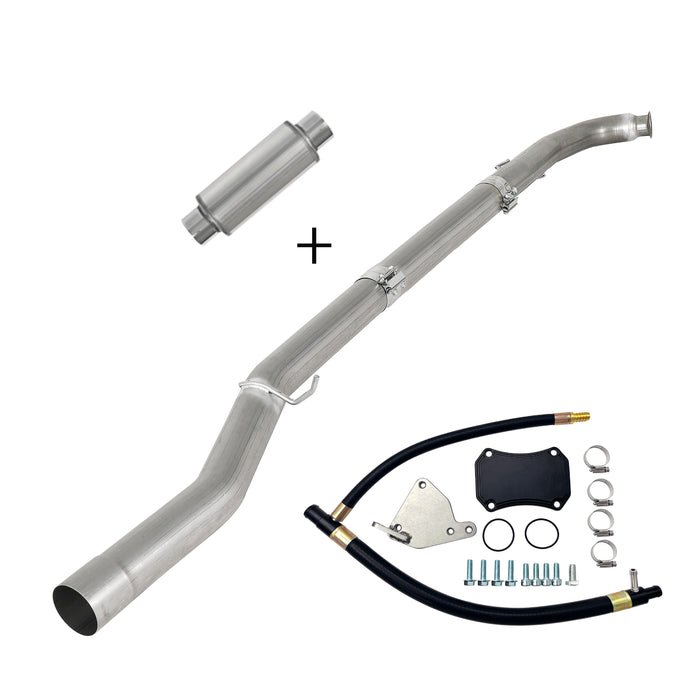
2011-2016 6.6L Duramax LML 4"/5" DP-Back DPF/EGR Delete kit
TruckTok builds the delete kit the way the LML actually needs it — split by year, because the truck itself is split by year. The LML Duramax DPF & EGR delete kit is modular, so you buy exactly the configuration your truck calls for:
-
Fitment is split into 2011–2015.5 (V-band) and 2015.5–2016 (3-bolt flange) — so there’s no guesswork about the downpipe connection.
-
Choose 4" or 5", and race pipe or full DP-back, and with or without muffler.
-
The EGR delete removes the cooler entirely, stopping carbon sludge and internal coolant leaks at the source.
-
Pricing starts at $299 for a 4" race pipe with EGR delete, through $873.50 for a 5" DP-back with muffler — and you can also buy the EGR delete or the pipe separately if you only need half the job.
The result is what a delete is supposed to deliver: a drastic EGT drop, an end to active regenerations, a clean intake, and no DEF countdown. Every configuration is mandrel-bent stainless, and the year split guarantees the hangers and frame clearance line up around the updated DEF and chassis components.
Two Add-Ons You Don’t Need — But You’ll Want
A full LML delete works without either of these — they’re optional, not required. But each one removes a lingering annoyance the base delete leaves behind that most owners add them while the truck is already apart.
1. CCV/PCV Reroute — the “Other Half” of a Clean Intake
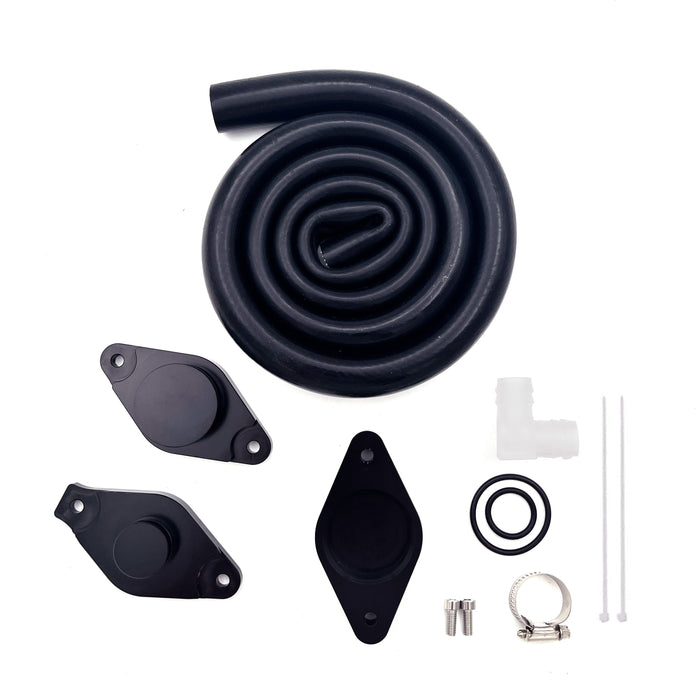
TruckTok 2011–2016 6.6L LML CCV/PCV Reroute Delete Kit
Here’s the mechanic’s secret: an EGR delete removes the dry soot from your intake, but the factory CCV system is still pumping oily crankcase vapor right back into the turbo. Soot plus oil mist equals the cement-like sludge that chokes intake valves. Deleting both is what actually leaves your engine breathing clean, dry air.
2. Tuner Harness Plug Kit — Protect the Wiring You’re Leaving Behind
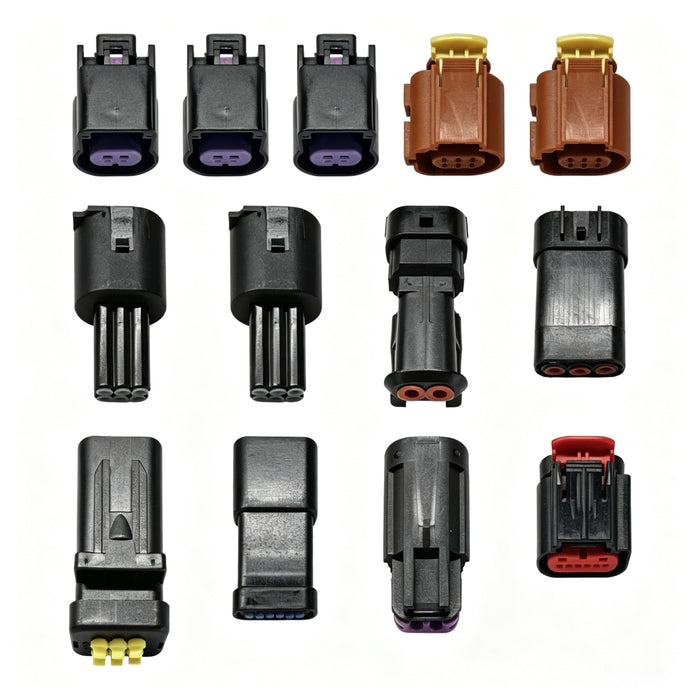
TruckTok 2011–2016 6.6L LML Tuner Harness Plug Kit
When you delete, you disconnect a lot of sensors — EGT sensors on the frame rail, NOx modules, the DEF harness, the EGR and 9th-injector connectors. Leave those open plugs exposed to water, mud, and road salt, and you get corrosion and short circuits that cause new electrical gremlins.
This kit seals every one of them with weather-proof, keyed block-off plugs that snap into the factory connectors. If you ever want to return the truck to stock, the original connectors are still clean and plug right back in.
How the Delete Goes In: A Step-by-Step Walkthrough
The LML delete is a real job — plan 6–10 hours for a first-timer — but it’s methodical. Here’s the full walkthrough, drawn from real installs on both the V-band (2011–2015.5) and 3-bolt (2015.5–2016) trucks.
Tools You’ll Need
- Socket set: 8mm, 10mm, 11mm, 13mm, 15mm, plus a 13mm shallow socket with extension for the up-pipe bolts
- Flex-head ratchet wrenches — the single most useful tool for the tight back-of-engine bolts
- Sawzall (if cutting the exhaust out), pry bar, hammer
- Pick and flathead screwdriver for coolant and connector clips
- Penetrating oil (PB Blaster) — apply to exhaust bolts a day ahead
- Coolant catch pan, fresh coolant, and a magnetic tray for the small bolts
Step 0: Flash the Tune First
This is non-negotiable. The LML runs a Bosch EDC17 ECU that expects EGR flow, DPF backpressure, and DEF injection. Flash the delete tune before you unbolt anything — the tuner needs the factory calibration still in place to create a backup. Mini Maxx V2 or EZ Lynk are the common pairings. Keep the batteries charged during the flash: the EDC17 is sensitive to voltage fluctuation, and a dropped voltage mid-flash is the #1 way to brick an ECM.
Step 1: Clear the Working Space
- Jack the cab. Remove the four passenger-side cab mounts, loosen the four driver-side ones, and lift the cab a couple inches with a floor jack — stick a 2x4 in the gap. This is the single biggest time-saver on the LML, because it opens up the space behind the turbo where the EGR cooler lives.
- Drain the coolant. There’s no convenient drain cock on the LML — use a pick to pop the metal retainer off the lower radiator hose and catch the coolant in a pan.
Step 2: Strip the Top of the Engine
- Remove the turbo silencer (two 10mm bolts), then the aluminum intake piping (unplug the sensors and bracket bolts).
- Pull the black plastic turbo inlet — loosen the V-band clamp and the hose clamp, then work it out.
- Remove the turbo heat shield (three bolts) to expose the downpipe and up-pipe area.
Step 3: Pull the Exhaust
- Unplug every sensor on the exhaust first — EGT sensors, NOx modules, the DEF injector and its feed line. The DEF feed line comes off by pinching the two square tabs.
- Loosen the downpipe connection: V-band clamp on 2011–2015.5, three bolts on 2015.5–2016.
- Either cut the exhaust out with a sawzall (three cuts: ahead of the rear axle, mid-pipe, and ahead of the front hanger) or drop the whole assembly by removing the transmission crossmember.
- Remove the DEF tank if you want it gone entirely — two straps, a couple 13mm bolts, and the fill-spout wiring.
Step 4: Remove the EGR System
- Pull the downpipe, then the EGR valve (four bolts — the bottom one is the worst, so take it slow with a wrench).
- Disconnect the EGR cooler’s coolant hoses and mounting bolts, then work the L-shaped cooler out toward the firewall. The rear bolts are the tightest part of the whole job.
- If you’re swapping the up-pipe too, remove the six 13mm bolts — they’ll be heat-soaked and seized, so heat them, use penetrating oil, and work them back-and-forth rather than forcing them.
Step 5: Install the New Hardware
- Fit the block-off plate (with the gasket) if you’re keeping the stock up-pipe, or bolt in the new up-pipe if you’re replacing it.
- Reroute the coolant. This step is not optional — without it, you create hot spots on cylinders #4 and #8. Loop the hoses the way the kit specifies and clamp them tight.
- Hang the new exhaust from front to back — get the hangers located before you final-tighten the V-band or the three-bolt flange.
Step 6: Refill, Burp, and Verify
- Refill the coolant and burp the system — the LML holds a lot of air, and you’ll likely have to top it up again after the first drive to temperature.
- Start it, check for exhaust and coolant leaks, and clear any remaining codes.
- Cap the orphaned sensor connectors (the harness plug kit above) so water and salt don’t corrode them.
Where People Get It Wrong
- Skipping the tune first — instant code wall and limp mode.
- Rushing the coolant reroute — the #4/#8 hot spot is how you crack a head on a “successful” delete.
- Forcing seized up-pipe bolts — that’s how you break a bolt in the turbo and turn a 6-hour job into a weekend.
The Legal Reality (Read This Before You Commit)
None of this is street-legal, and it’s worth saying plainly rather than burying it in fine print.
- Removing or disabling emissions equipment on a vehicle driven on public roads violates the federal Clean Air Act (42 U.S.C. § 7522) and EPA regulations under 40 CFR § 1068.101.
- Individual penalties can reach $5,911 per violation, and commercial penalties under the Clean Air Act are far higher.
- Deleting voids any remaining emissions warranty and will fail inspection in any state that requires it.
- A deleted truck is harder to trade in — most dealers won’t take a deleted diesel.
Everything in this guide is for off-road, race, and competition use only, where permitted by law. Know your local and state regulations before you modify anything.
Conclusion
The 2011–2016 LML Duramax is a genuinely strong engine — forged internals, a robust Allison 1000 behind it, and a block that’ll run 300,000+ miles. Its reputation for being expensive to own comes almost entirely from the three emissions systems GM bolted to it, and the 55 mph limp mode is the most visible symptom of that.
A DPF & EGR delete ends the problem at the source: no regen cycles burning your fuel, no EGR cooler waiting to crack, no DEF system to lock you down on a cold morning. It’s the single highest-value reliability mod on this platform.
For the full LML lineup — the split-year DPF/EGR delete kit, the CCV reroute, and the tuner harness plugs — head to TruckTok.com. Every kit is built for the LML’s exact 2011–2015.5 vs 2015.5–2016 fitment split, ships free, and is backed by year-specific guidance so you order the right pipe the first time.
Frequently Asked Questions
Q1: Will the delete trigger a check engine light?
A: Not if it’s tuned. The hardware delete must be paired with a matching ECU tune that disables EGR, DPF, and DEF monitoring — otherwise the truck sets codes and risks derate. The tune and hardware go together.
Q2: Do I need a tune for just an EGR delete?
A: Yes. The LML’s ECM expects EGR flow, and removing the EGR without a delete tune will throw faults. On this platform, the tune is non-negotiable.
Q3: Does the delete fix the CP4.2 fuel pump problem?
A: No. The delete removes emissions hardware and indirectly reduces stress on the pump by cutting backpressure, but the CP4.2 weakness is a separate design flaw. A CP3 conversion is the only permanent fix.
Q4: What’s the difference between the 2011–2015.5 and 2015.5–2016 fitment?
A: The turbo downpipe connection changed mid-2015. Early trucks use a V-band clamp; late 2015 (2015.5) and 2016 use a 3-bolt flange. Inspect the downpipe connection before ordering.
Q5: Can I delete just the DPF and leave the EGR?
A: You can, but a full delete with matched tuning is the recommended path. Running a partial delete without proper tuning can leave persistent fault codes or derate conditions.
Q6: How much power will I gain?
A: The delete itself adds little — the gains come from the tune. Owners typically see +40–80 hp and +80–120 lb-ft at the wheels, depending on tune level and supporting mods.
Q7: Will my fuel economy improve?
A: Yes, typically +3–5 MPG, almost entirely from eliminating active regeneration. The fuel that used to burn soot off the DPF now moves the truck.
Q8: What is the 55 mph limp mode?
A: It’s the DEF system’s speed-reduction penalty. When the ECM detects a DEF fault, it progressively limits speed — 65 mph, then 55 mph, then 5 mph — until the issue is resolved with a dealer-level reset.
Q9: Do I need the CCV reroute if I’m already deleting the EGR?
A: It’s recommended. The EGR delete removes dry soot, but the CCV system still pumps oily crankcase vapor into the intake. Soot plus oil equals the sludge that chokes valves, so deleting both is what actually cleans the intake.
Q10: Can I revert to stock after a delete?
A: Yes, if you retain all the factory hardware and your tuner supports flashing the original calibration back. A harness plug kit keeps the disconnected connectors clean so reconnection is painless.
Q11: How long does the install take?
A: A full delete is a 6–10 hour job for a confident DIYer. The EGR cooler access at the back of the engine and the coolant reroute are the slow parts.
Q12: Is a delete legal to drive on the street?
A: No. Removing emissions equipment violates the federal Clean Air Act and can carry fines up to $5,911 for individuals. These parts are for off-road, race, and competition use only — check your local laws.