

Home > News > Why Do We Need 2006-2010 Duramax Filter Maintenance Kit —Instead of buying one
Why Do We Need 2006-2010 Duramax Filter Maintenance Kit —Instead of buying one
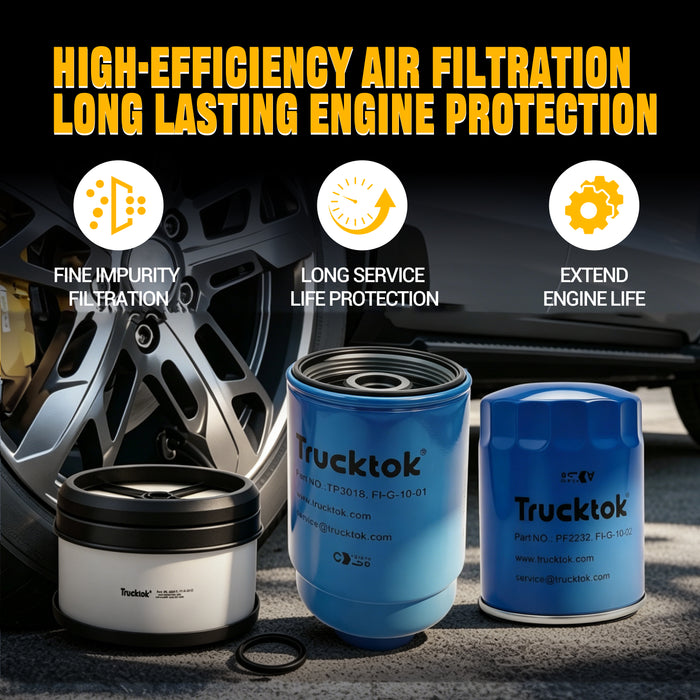
A 2006–2010 6.6L Duramax doesn’t stay reliable by accident. It stays reliable because somebody keeps feeding it three things: clean air, clean fuel, and clean oil. Those three needs map directly onto three filters — an air filter, a fuel filter, and an oil filter — and every one of them protects a different expensive system on the same engine.
The question isn’t whether to change them. It’s why you should buy them as one kit instead of tracking them down one at a time. The short answer: three filters, three separate systems, one shared maintenance cycle, one box, one price that beats the sum of its parts.
What the Three Filters Are Actually Doing Every Mile
A turbocharged common-rail diesel is an unforgiving machine. It moves a huge volume of air under boost, pushes fuel through an injection system running at extreme pressure with clearances measured in microns, and holds a heavy load of combustion soot in its oil. Each filter is the first line of defense against a different kind of contamination.
The Air Filter (D3087C): The Turbo’s Only Defense
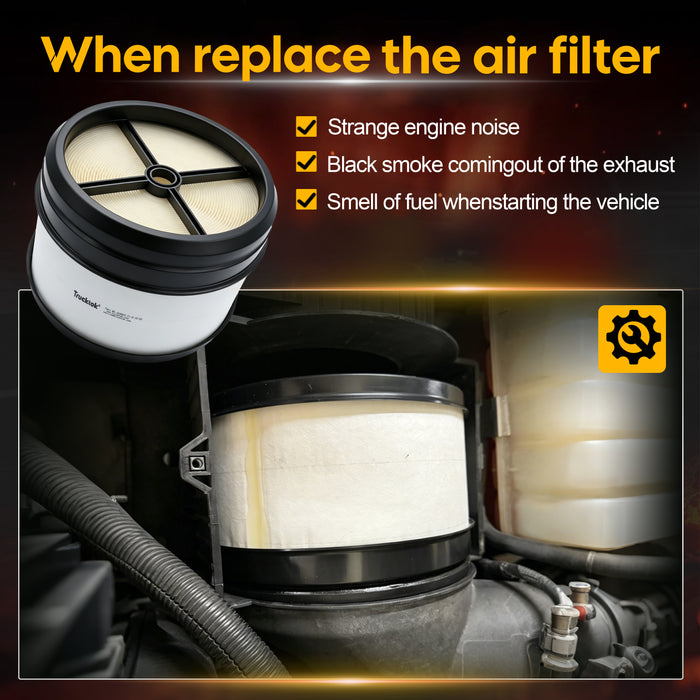
The D3087C is a panel-style filter that lives in the airbox on the passenger side of the engine bay. Its job is simple and absolute: feed the turbocharger a steady supply of clean air.
A turbocharged Duramax pulls a large volume of air under load, and dust ingestion is a slow killer — abrasive particles scuff the compressor wheel and accelerate turbo wear over time. The D3087C uses pleated media with a molded polyurethane perimeter seal designed to sit flush in the factory airbox. That seal is the whole point: a filter that doesn’t seat flush lets unfiltered air slip around the edge and straight into the turbo inlet, bypassing the media entirely.
The Fuel Filter (TP3018): The CP3 Pump’s Guardian
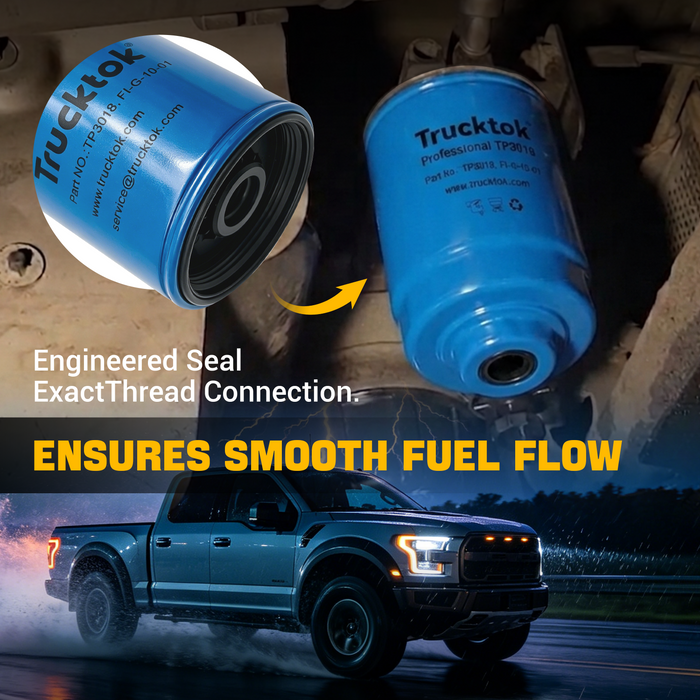
The TP3018 is a spin-on canister mounted near the passenger-side front wheel, accessed through the fender liner. It’s the first line of defense for the Bosch CP3 injection pump and the injectors it feeds.
Water is the enemy here. It’s heavier than diesel, so it settles to the bottom of the housing, where a drain valve and a water-in-fuel sensor sit. The filter is designed to remove contaminants and separate water before either reaches the injection system — because at injector pressures, a microscopic water droplet or a bit of tank sediment is all it takes to score a surface or clog a nozzle.
The Oil Filter (PF2232): Holding the Soot Load
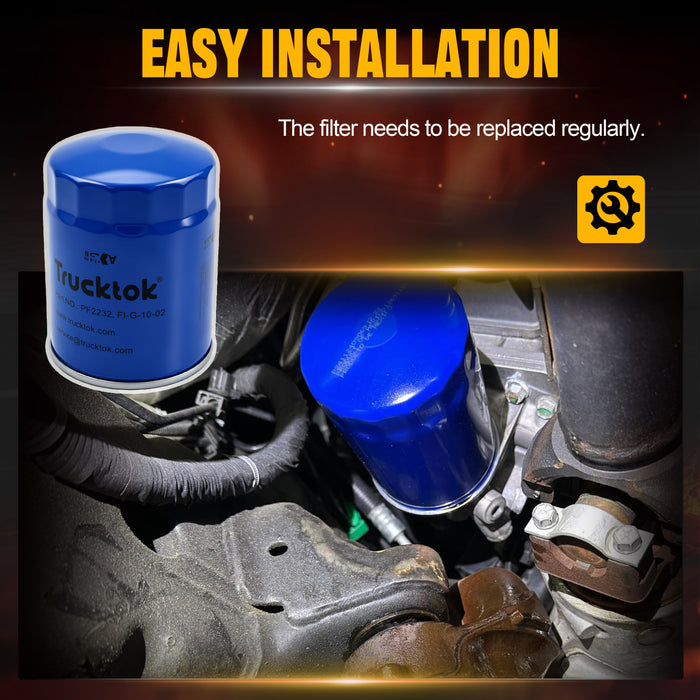
The PF2232 is a spin-on canister mounted low on the driver’s side of the engine block. Diesel oil turns black within 50 miles of a change because combustion soot blows past the rings into the crankcase. The oil filter’s job is to hold that soot load in suspension and keep it out of the main bearings and the turbocharger shaft.
These three filters are the maintenance triangle that separates a well-kept high-mileage Duramax from one that develops problems early.
Why “Buying One” Falls Apart
Most owners replace filters one at a time because each has a slightly different interval. The air filter protects the turbo, the fuel filter protects the injection system, the oil filter protects the lubrication system — three separate systems, but they wear on a shared schedule and they all protect the same engine.
You Will Forget
The problem with buying them individually is the thing nobody plans for: you forget one. You do the oil change and grab the oil filter, but the fuel filter slips to “next time.” You remember the air filter when you’re already at the parts counter buying something else. Each missed filter is a system that keeps running on a part that’s quietly loading up.
A complete kit closes that question
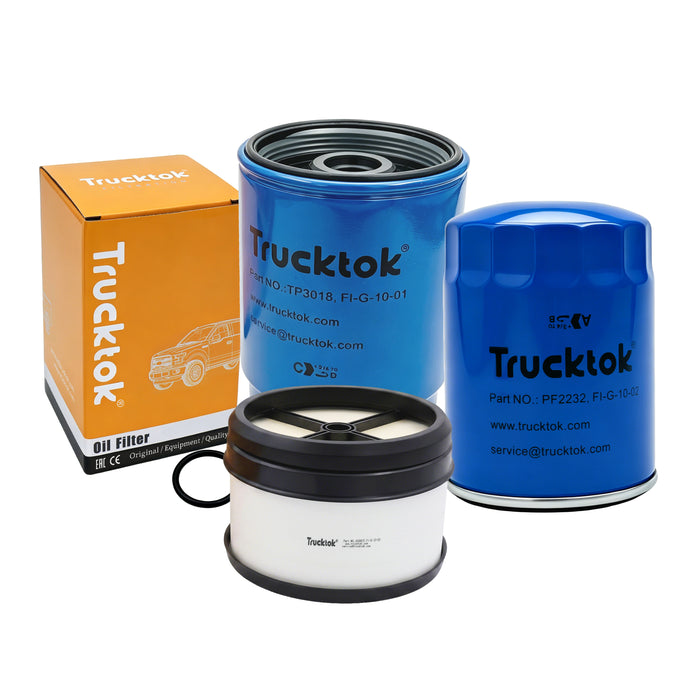
One order puts everything for a full service cycle in a single box — three part numbers (D3087C, TP3018, PF2232) that cross-reference to a long list of OEM and aftermarket numbers, so you can match whatever is stamped on the filter already in the truck.
The Cost Math: What Three Filters Actually Run
Here’s how the three-filter service stacks up across the ways you could buy it:
| Buying Method | Air (D3087C) | Fuel (TP3018) | Oil (PF2232) | Total | Notes |
|---|---|---|---|---|---|
| TruckTok Kit FI-G-10-01/10-02/10-03 | ✅ | ✅ | ✅ | $93.57 | All three, free shipping, one box |
| Dealer parts counter (OEM) | $35–45 | $55–75 | $20–30 | $110–150 | Sold separately, no bundle |
| Dealer-installed service | — | — | — | $290–365 | Adds 1–1.5 hr shop labor |
| Online OEM retailer | $30–40 | $45–60 | $18–28 | $93–128 | Often separate shipments |
| Auto parts store | $28–40 | $40–60 | $15–25 | $83–125 | Off the shelf, no bundle |
| Generic marketplace kit | ⚠ verify | ⚠ verify | ⚠ verify | $35–55 | Limited filtration/water-separation info |
The honest math:
a dealer charges around $340 for a three-filter service — roughly $140 in parts and $200 in labor for a job that doesn’t require lifting the cab or pulling anything apart. Buying the same cross-reference numbers individually lands around $110–150. The kit puts all three in one box at $93.57 with free shipping .
The parts are the honest part of any of these bills. The rest is paying somebody to spin three filters.
Know Your Truck: LBZ or LMM?
The 2006 model year introduced the LBZ, one of the last pre-DPF Duramax generations. From 2007.5 through 2010, the LMM carried the same 6.6L architecture with a DPF bolted on.
| Parameter | 2006–2007 (LBZ) | 2007.5–2010 (LMM) |
|---|---|---|
| Displacement | 6.6L V8 | 6.6L V8 |
| Horsepower | 360 hp | 365 hp |
| Torque | 650 lb-ft | 660 lb-ft |
| Injection pump | Bosch CP3 | Bosch CP3 |
| Oil capacity | 10 qt with filter | 10 qt with filter |
| Emissions | No DPF | DPF |
| Fuel filter interval | 15k–20k mi | 15k–20k mi |
| Oil change interval | 7,500 mi (severe 5,000) | 7,500 mi (severe 5,000) |
The good news for anyone shopping filters: both generations use the exact same three filter applications. The LBZ and LMM share the D3087C air filter, TP3018 fuel filter, and PF2232 oil filter. Whether your truck is an LBZ or an LMM, the same kit covers it.
The one thing worth knowing about the difference:
The LMM’s DPF is the reason a lot of owners are extra careful about fuel quality — a DPF-equipped truck that regenerates is already working its fuel harder, and clean diesel through the TP3018 is the baseline it depends on.
Why the CP3 Pump Is the Reputation — and the Warning
The 2006–2010 Duramax earned its reputation partly on the Bosch CP3 injection pump, which developed a name for durability when it’s fed clean fuel. It’s a genuinely tolerant pump compared to some of the later high-pressure designs.
The “tolerant” is not the same as “maintenance-free”:
The CP3 still relies on clean, properly filtered fuel, and the injectors it feeds run at extreme pressure. Water and abrasive debris are what wear that pump out over time — which is why the fuel filter matters, and why the air and oil filters share the same load.
The takeaway:
A CP3 that’s still healthy at 250,000 miles is almost always a CP3 that’s been fed clean fuel its whole life. That’s not luck. That’s the fuel filter doing its job.
Why Maintenance Matters More as the Truck Gets Older
When a Duramax is new, every system has margin. As mileage climbs, every component leans harder on good maintenance.
- A turbocharger with hundreds of thousands of miles depends on clean intake air.
- A CP3 injection system that has delivered fuel for years depends on clean diesel.
- An engine that has produced millions of combustion cycles depends on effective oil filtration.
This is why experienced owners don’t wait for a symptom before changing filters. By the time a restricted filter produces a noticeable problem, the engine has already been working harder than it should. A filter is a fraction of the cost of the turbo, injector, or fuel system it protects — and a lot easier to replace.
Towing Changes Your Schedule
Most Duramax trucks weren’t bought as commuters. They were bought to tow — and that changes how often the filters should be changed.
The Trailer Requires More Air
When a 6.6L pulls a heavy trailer, it asks for more air, more fuel, and more lubrication. The turbo moves more air, the fuel system works harder to hold power, and the oil carries more heat and combustion byproducts. A truck that spends its weekends climbing grades with a fifth wheel behind it has a harder workload than one that cruises the highway empty.
For owners who regularly tow, the severe-use intervals apply:
air and fuel filters drop to around 10,000–15,000 miles, and oil changes come sooner when the engine is working hard. Many experienced diesel owners inspect their filters before towing season begins — a few simple checks ahead of time means fewer surprises when the truck is working its hardest and a breakdown costs the most.
How to Know a Filter Is Past Due
Filters load gradually, so the engine is often working harder before a symptom becomes obvious:
- Air filter: softer turbo response or a slight drop in fuel economy. The computer adjusts fueling to compensate, so the power loss is easy to miss — but a filter that’s been in too long will show up as reduced airflow.
- Fuel filter: a stumble under hard acceleration, difficulty starting, or a water-in-fuel warning light. These are the classic signs the filter is loading up.
- Oil filter: once it’s loaded past its capacity, it stops holding soot as effectively — which is exactly the thing it’s there to prevent.
None of these are catastrophic on their own. But they all point the same direction, and they all cost a few dollars to fix before they cost real money.
What Separates a Quality Filter From a Budget Imitation
The three filters in a kit may look similar to other sets in a listing photo. The difference is whether the specifications are published, and it shows up a few thousand miles into the interval.
A quality filter spells out its filtration rating, its media construction, and its water-separation performance. A budget filter often leaves those blank — and on a common-rail diesel, “blank” is a risk you can’t see until the injectors start to complain. The kit’s three filters are built to the cross-reference numbers they replace, with the ratings spelled out instead of left blank.
The Product: One Box, Three Filters, All Three Systems
If you’ve read this far, here’s the kit that lines up with everything above.
2006-2010 6.6L Silverado Sierra Duramax Air, Fuel & Oil Filters Maintenance Kit
A complete three-filter service package for the LBZ and LMM Duramax: a high-flow D3087C engine air filter, a heavy-duty TP3018 spin-on fuel filter, and a high-capacity PF2232 oil filter. The air filter’s molded polyurethane seal keeps unfiltered dust out of the turbo, the dual-stage fuel filter traps tank sediment and emulsified moisture before they reach the CP3, and the oil filter manages the heavy soot load of a high-mileage diesel.
- Fitment: 2006–2010 Chevrolet Silverado and GMC Sierra 2500HD / 3500HD with the 6.6L Duramax — covers both LBZ and LMM.
- OEM cross-reference: Fuel TP3018 / TP3012 / 12664429 · Oil PF2232 / 12691158 · Air D3087C / A3087C / 25839611.
- Interval: air and fuel every 15,000–20,000 miles (10,000–15,000 severe), oil filter at every oil change.
One order, one tracking number, and the whole maintenance triangle closed out at once.
The Install: Three Filters, Three Locations, About an Hour
Three filters, three locations, and none of them require removing the cab or dropping a skid plate. Total time for a first-timer is about an hour; with practice, under 45 minutes. If you want to view a more detailed and illustrated installation guide, you can visit the TrucktokForum.
Tools You’ll Need
| Tool | Spec | Used For |
|---|---|---|
| Oil filter wrench | Band-style or cap-style | Fuel filter and oil filter removal |
| 16mm socket | 3/8" drive | Oil drain plug |
| 15mm socket | 3/8" drive | Skid plate bolts (optional, 4) |
| Flathead screwdriver | Small | Airbox lid screw |
| Drain pan | 3+ gallon | Fuel and oil |
| Shop vacuum | — | Clean the airbox (no compressed air) |
| Nitrile gloves | — | Diesel oil and fuel aren’t skin-friendly |
| Primer pump | Built into the housing | Fuel system priming |
Engine Air Filter (D3087C) — The Easy One
The air filter lives in the airbox on the passenger side, and it’s held by a single screw — not spring clips. Do this one first while the engine is cold.
-
Remove the airbox cover. Loosen the screw and lift the cover off. No prying, no clips to fight.
-
Pull the old filter. Don’t yank it straight out — grab the opening in the middle and work it free with a back-down-lift-up motion until it pops loose. Fresh D3087C media is white; if yours is dark gray or streaked, it’s been doing its job.
-
Vacuum the airbox. Pull dust, sand, and leaf fragments out of the lower box before anything gets drawn into the intake. Don’t use compressed air — it can force debris up toward the turbo.
-
Install the new filter. The molded sealing ring seats one way. Push it in deep and firm until you feel it lock, then run a finger around the entire perimeter to confirm the seal is flat with no gaps. A filter that isn’t flush lets unfiltered air bypass the media.
-
Reinstall the cover and reset the indicator. Seat the cover and the screw. If your airbox has a restriction indicator (filter minder), press the reset button so it returns to clean.
Engine Fuel Filter (TP3018) — Take the Priming Seriously
The TP3018 is a spin-on canister behind the passenger-side fender liner. It’s the filter that protects the CP3, so the priming step at the end is the one that matters most.
-
Fold the fender liner back. It’s held by roughly ten plastic push pins around the passenger-side front wheel. Pop them loose and swing the liner out of the way — you can see the filter from the top, but real access comes from below through the wheel well.
-
Unplug the water-in-fuel sensor. Under the filter is the WIF sensor with a small two-pin connector. Push the tab and unplug it first — leaving it connected while you wrench risks tearing the wires.
-
Remove the old filter. Slide an oil filter wrench up onto the canister and break it loose counterclockwise. A dealer-installed filter tends to be overtightened. Once it breaks free, spin it off by hand with the drain pan underneath — the canister is full of fuel and will spill.
-
Transfer the WIF sensor. Unthread the sensor from the base of the old filter (channel-locks work, just don’t chew the threads). The sensor has a small float that needs to stay clean. The new filter comes with a fresh gasket — pry the old one off, lubricate the new one with a little diesel, and thread the sensor into the new filter. Don’t stack two gaskets.
-
Install the new filter. Write the date and mileage on it in Sharpie first, so there’s no guessing later. Thread it on by hand until the gasket contacts, then snug — not too tight. Reconnect the WIF sensor and reinstall the liner.
-
Prime the fuel system. This is the step that saves the pump. Don’t crank the engine with an empty filter housing. Crack the bleeder screw on top of the housing, press the manual primer pump repeatedly until fuel and air bubble out, then tighten the bleeder once you get a steady stream with no air. Give it a few more pumps until you feel pressure, then start the engine and check the base for drips.
Engine Oil Filter (PF2232) — The Messy One
The oil filter is a spin-on canister low on the driver’s side of the block. Expect oil to spill — it’s a normal part of a Duramax oil change.
-
Warm the engine. Run it for 3–5 minutes so the oil drains faster, then shut it off and remove the oil fill cap.
-
Drop the skid plate (optional). Four 15mm bolts hold the front skid plate. Removing it keeps the drain from soaking everything under it.
-
Drain the oil. Position a 10+ quart pan under the oil pan and remove the drain plug with a 16mm socket.
-
Remove the old filter. Spin it off counterclockwise with the wrench, then by hand. The filter holds roughly half a quart — keep the pan underneath.
-
Check for the old gasket. Reach up and feel for the old rubber gasket on the mounting surface. On Duramax engines it can separate from the filter and stay stuck to the block — and stacking two gaskets will blow out on startup. Wipe the surface clean every time.
-
Pre-fill and install. Fill the new PF2232 with clean diesel-rated oil when possible and let it soak in. Film the gasket with clean oil, then spin it on by hand until it contacts and tighten hand-firm. A pre-filled filter builds oil pressure almost immediately instead of running dry while it fills.
-
Reinstall the plug and refill. Replace the drain plug (a new crush washer prevents slow drips) and add about 9 quarts to start.
-
Start, check, top off. Start the engine and watch oil pressure climb within a couple of seconds. Check for leaks, shut it off, let it sit a minute, then check the dipstick (passenger-side firewall) and top off to full — a 10-quart Duramax usually needs about three-quarters of a quart more after the initial 9.
-
Reset the oil life monitor. Key on without starting, navigate to the oil life percentage with the steering-wheel controls, and hold the reset until it climbs back to 100%.
Where DIY Installers Get It Wrong
-
Skipping the fuel prime. Cranking an empty filter housing starves the CP3 of lubrication on startup. This is the #1 rookie mistake and the easiest to avoid.
-
A poorly seated air filter. If the seal isn’t flush, unfiltered air bypasses the media and heads straight for the turbo. Push until it locks, then check the perimeter.
-
Stacking two oil filter gaskets. The old gasket stays stuck to the block, the new one goes over it, and they blow out on startup. Feel for the old one every time.
-
Choosing a filter on price alone. Two filters can look identical in a photo while having completely different media and water-separation performance. On a common-rail diesel where injectors clear in microns, the missing specs are what matter.
-
Leaving the WIF sensor connector dangling. Reconnect it properly, or you’ll get a water-in-fuel warning that isn’t real.
After the Install: How to Keep the Filters Working Longer
Installing the filters is half the job. The other half is the habits that stretch each one to the end of its interval — or catch a problem before it loads up and costs real money.
Write It Down, Don’t Guess
Mark the date and mileage on each filter in Sharpie before it goes in — especially the fuel filter, which doesn’t have its own life monitor on every truck. The biggest source of “when did I change this?” is a filter with no date on it. Thirty seconds of Sharpie work now saves a guess later.
Stop Pulling the Air Filter Out to “Check” It
A dry panel filter doesn’t need to be yanked out and held up to the light every few weeks. Repeated removal flexes the molded seal and shortens its life, and each time you open the airbox you’re giving dust a chance to get in. Trust the restriction indicator on the airbox — it reads red when the filter is actually restricting airflow. Change it when it trips, not when the media merely looks gray.
Drain the Water Separator Monthly
Water is heavier than diesel and settles to the bottom of the fuel filter housing. A 30-second monthly drain keeps it away from the CP3 and the injectors. It’s cheap insurance, and it’s the single easiest thing you can do to protect a high-pressure common-rail fuel system between filter changes.
Feed It Good Fuel
A filter can only separate what’s in the tank. Quality diesel with low moisture and low sediment means the TP3018 has less to catch and goes the full interval. Where it’s practical, buy fuel from high-turnover stations — a busy pump means fresher fuel and less water sitting in the station’s tanks. And avoid long idle sessions, which load the oil with soot and put extra work on the oil filter.
Don’t Stretch the Oil Interval to “Save Money”
Diesel oil carries a soot load that gasoline oil never sees, and the PF2232 is only designed to hold so much of it before it stops being effective. Chasing an extra few thousand miles past the interval to save a few dollars is a false economy — the filter and oil are a fraction of the cost of the bearings and turbo they protect.
Recheck for Leaks After a Few Hundred Miles
New gaskets settle, and a filter that was snug at install can show a weep after a few heat cycles. Give it 500–1,000 miles, then take a quick look at the fuel filter base, the oil filter base, and the drain plug. A slow drip caught early is a wipe-and-tighten; caught late it’s a mess on the driveway and a seal that’s been leaking the whole time.
Inspect Before Towing Season
If the truck’s main job is pulling, do a quick three-filter check before the season starts — confirm the air filter isn’t restricted, the fuel filter has a fresh date, and the oil is at the right level with the filter in good shape. A few minutes of inspection before the truck works its hardest means fewer surprises when a breakdown costs the most.
Conclusion
The 2006–2010 6.6L Duramax is one of the most durable diesel platforms ever bolted into a pickup — but that durability isn’t self-sustaining. It runs on clean air, clean fuel, and clean oil, and each of those depends on a filter that’s doing its job.
Buying those three filters as one kit instead of one at a time isn’t just cheaper — it’s the difference between a maintenance cycle you actually complete and one where the fuel filter quietly slips to “next time.” Three filters, one box, one price that beats the dealer’s parts counter by a wide margin.
If you’re keeping an LBZ or LMM on the road past 200,000 miles — and plenty of owners are — this is the easiest, cheapest way to protect the three systems that make the truck worth keeping. Grab the TruckTok 2006-2010 Duramax Filter Maintenance Kit for $93.57 with free shipping.
For the full range of Duramax maintenance kits, filters, and supporting parts — and to confirm fitment for your exact year and cab — head to trucktok.com and browse the Duramax collection. Clean air, clean fuel, clean oil, and the Duramax keeps working.
Frequently Asked Questions
Q1: How often should I replace each of the three filters?
The air and fuel filters follow roughly the same schedule — every 15,000–20,000 miles normally, or 10,000–15,000 under severe use (heavy towing, dusty roads, frequent idling). The oil filter is replaced at every oil change, around 7,500 miles normally or 5,000 for a high-mileage truck on conventional diesel oil.
Q2: Does this kit fit my 2008 Silverado 2500HD or 3500HD?
Yes. The kit covers all 2006–2010 Chevrolet Silverado and GMC Sierra 2500HD and 3500HD trucks with the 6.6L Duramax, across cab configurations, bed lengths, and trim levels — both LBZ and LMM generations.
Q3: Do I need to prime the fuel system after changing the fuel filter?
Yes. Starting with an empty filter housing can starve the CP3 pump of lubrication. Use the manual primer pump on the housing until you feel pressure before starting the engine.
Q4: Where is each filter located?
The air filter is in the airbox on the passenger side of the engine bay. The fuel filter is a spin-on canister behind the passenger-side fender liner. The oil filter is a spin-on canister low on the driver’s side of the engine block.
Q5: What’s the difference between the LBZ and LMM for these filters?
None, for this kit. The LBZ (2006–2007) and LMM (2007.5–2010) use the same D3087C air filter, TP3018 fuel filter, and PF2232 oil filter. The only real difference is that the LMM added a DPF.
Q6: Does the fuel filter have a water-in-fuel sensor?
Many 2006–2010 trucks have a water-in-fuel (WIF) sensor in the bottom of the fuel filter housing. It’s reused during a filter change — remove it from the old filter and transfer it to the new TP3018, checking the seal as you go.
Q7: Is this kit cheaper than buying the three filters separately?
In most cases, yes. The dealer parts counter sells the three AC Delco filters for roughly $110–150, and online listings often ship them separately. The kit bundles all three for $93.57 with free shipping in one box.
Q8: Can I do all three filters myself without a lift?
Yes. The air and fuel filters are done from above (the fuel filter through the wheel well), and the oil filter and drain plug are accessible from underneath without lifting the truck on a stock-height vehicle.
Q9: Do I need to drain the water separator?
It’s good practice to drain it when you change the fuel filter, and a 30-second monthly drain is cheap insurance. Water settles to the bottom of the housing, and draining it keeps it away from the injectors and pump.
Q10: What tools do I need?
An oil filter wrench, a 16mm socket for the drain plug, a flathead screwdriver for the airbox, a drain pan, and a shop vacuum for the airbox. The fuel system uses the built-in primer pump — no special tools.